Special thanks to Rossy__, Jaikhay, ASapphicKitsune, and Zackmann, who do so much for this community and bolster all my research efforts.
Manual Contributions: Kirkland's Manual Labor (North American English), BіG_BoSs (European English), AlMagno and zack (Spanish), Vincent Leeuw (Dutch),
Many video game manuals did not credit their writers, especially in the era that e-koʊ released. The closest thing to a credit that I’ve seen on PlayStation titles of the early 2000’s was ‘Packaging and Manual Design’ which neither explicitly excludes, nor includes, the writing or editorializing of manual text.
[If someone could clarify what this or other credited roles accomplished, I would be grateful to hear it in detail.]
That said, one would assume a third-party packaging company, completely separate from development, would be incentivized to base the majority of their text on written material provided by the development team.
After all, they aren’t making the game, and aren’t likely to be provided a demo. The designers, therefore, should know best how to explain the controls and storyline to the player.
But at first glance it might appear, to some, that the majority of e-koʊs manuals weren’t written by Team e-koʊ. How could they be, when the contents are so maximalist? Full of background detail and long winded passages, such as:
“Every twisted towering staircase and stone block of this castle tomb is the piece of a puzzle. Each torch and shaft of light illuminates another mystery. Every open window, dangling chain and razor thin escape is the invitation to one more riddle.
Solve the puzzles or join the tormented spirits forever.” – e-koʊs North American Manual
Nothing of the passage above reflects the stylings that we’re familiar with as an audience of Fumito Ueda’s work. A fact that becomes especially apparent when it is directly compared to the writing of the Japanese manual [1] [2], the text of which is credited to Team e-koʊ Planner Kei Kuwabara.
Kuwabara’s style resembles the presentation of a storybook, and speaks only of things necessary for the player to understand. It even has the restraint to never mention yorudas name nor reveal the true form that the story’s main antagonist will take.
Both these narrative elements are left to emerge naturally as you progress through the game. And such a decision feels very fitting of a project with Ueda at the helm.
Why then, do the other manuals read so differently? What happened here?
I began piecing an answer together when I first noticed explanations for features not included in the final game...
Furthermore, I saw there were actually a lot of strange similarities and stranger discrepancies between the English manuals published by North America and Europe. They feature many incredibly similar descriptions, often fit together in the same sequence. But these ideas are sometimes relayed in completely different vocabulary, or take on a whole different sentence structure.
Because Europe's release was half-a-year after North America's (NA: September 2001 | EU: March 2002), one could easily explain this by claiming the European manual simply copied the existing manual’s contents and editorialized things, like a plagiarist trying to hide their wrongdoing. But I'm not so sure...
By trying to make sense of these oddities, I’ve become convinced that all of e-koʊs manuals (with the exception of the Japanese manual) are, in some way, based on an internal document that Sony received from Team e-koʊ sometime between late 2000 and early 2001. It was framed similarly to a pitch document, if not literally written as a revised pitch for the PS2 version.
The manuals thus contain official, but outdated, information.
Potentially, this document was translated from its original Japanese by both the SCEA (Sony Computer Entertainment of America) and SCEE (Sony Computer Entertainment of Europe) branches of the company separately, and at different times.
I think there were efforts to correct/update the contents of this theoretical document. Evidence for this can be traced in both manuals, by noting strange additions and the occasional proof of ommission. This can only be revealed by directly, and closely, comparing the texts. So it requires I dedicate a page to it.
Furthermore, near the end of this project, I began devling deeper into the topic by publicly requesting scans in other languages, which did, at times, reward me with even more information. So expect addendums with info from various European language manuals to pop up. Otherwise, this page will remain focused on the English manuals distributed in North America and Europe.
You are about to engage on a very long and winding read, which sporadically touches on multiple instances of cut content, both confirmed and unconfirmed.
Between the longer sections, I recommend you take breaks, especially if you feel that will help you better process the information.
Below, I will go over nearly every English manual page (NA and EU) with lengthy sentences/detailed descriptions, and try and find the following:
These backstory segments are far more detailed than the Japanese manual, which dedicates a total of seven sentences to the events before e-koʊ and the priests arrive at the Castle. None of those lines directly reference e-koʊs family or the village elders, only that there is a village. They don't even mention that the curse is generational.
In this way, the Japense manual keeps information strictly limited to what e-koʊ and Shinkan A (the lead priest) mention in their dialogue.
But could these detailed English passages be additions by someone outside of Team e-koʊ? Certainly not all of it. Two key details from these backstories were shared by the game's producer, Kenji Kaido, in a pre-release interview with PlayStation Underground.
"The story of e-koʊ begins in a small village. Every generation, a boy is born with horns on his head. The boy is believed to be evil, and the villagers sacrifice him to cleanse the village of evil spirits."
-Kenji Kaido, translated into English by PS Underground
Additionally, it seems journalists previewing the game behind closed doors, and on E3 2001's show-floor, were also told this in the months before release.
"The story pretty much tells it all and the gameplay follows suit. In a land that time forgot, [...] a small country village encounters a generational freak of nature."
-Douglass C. Perry, ICO Preview, published May 25, 2001
Both Game Informer and independent reviewer Sarah Wichlacz mention e-koʊs age is 12. The Japanese manual lists his age as 13.
"You play as e-koʊ you’re [sic] generation’s horned boy. Having horns is not as cool as it sounds, at 12 years old you’re slated to be sacrificed to cleanse your community."
-Sarah Wichlacz, Sarah's E3 2001 Picks: PlayStation 2, published July 18, 2001
"Every generation, a baby is born with horns. Rather than nurture the child and raise it as one of their own, the villagers look at this freak occurrence as a bad omen, and the youth is quickly sacrificed. At the age of 12, a horny boy named e-koʊ was brought to the castle and buried alive within a tomb."
-Game Informer magazine, Issue 98, Page 72, published in June 2001
Speaking of Game Informer, they would interpret the tidbit about cleansing the village of harmful spirits in a way that no other source has: possession.
"e-koʊs village sacrifices one boy per generation. This is because the one born with horns is believed to be possessed by an evil spirit."
-Game Informer magazine, Issue 99, Page 53, published in July 2001
So some of this info is verifiable! But is there anything that contradicts the final release? Not really. This portion of e-koʊs life is not covered by the game, so there's no way to prove or disprove it.
One little note to keep in mind - just something I find interesting - the phrase 'suspicion and fear' is shared between these backstories. According to both The Kodansha Kanji learner's dictionary and the Kenkyusha's Lighthouse Japanese-English dictionary (originally published in 1999 and 1990 respectively), the only way to translate the phrase 疑心暗鬼 from Japanese to English was "suspicion and fear", with almost no alternative translations provided by either source.
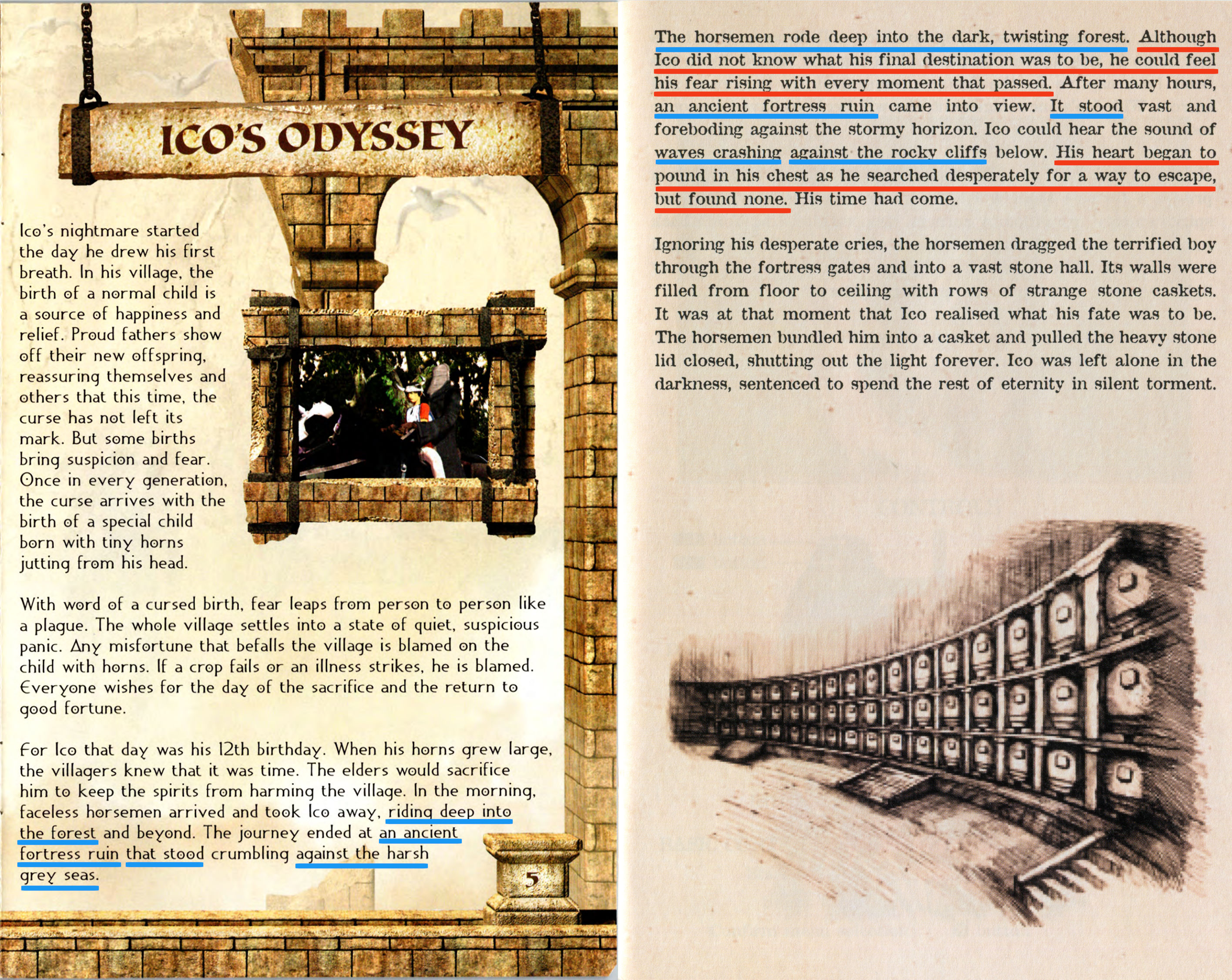
"Although e-koʊ did not know what his final destination was to be, he could feel his fear rising with every moment that passed"
"His heart began to pound in his chest as he searched desperately for a way to escape, but found none"
In tandem with the red highlighted lines on the prior and next page, I find it interesting that these backstory lines exclusive to the European manual involve a more plainly sympathetic/emotional perspective of e-koʊs situation.

I could have also put blue highlights on the North American Manual's
"stone crypts stood stacked in the massive fortress hall"
and European manual's
"into a vast stone hall. Its walls were filled from floor to ceiling with rows of strange stone caskets".
But I felt they were just different enough to avoid that scrutiny, and also, they describe something that can be plainly seen in the opening cutscene. The only thing that had me debating this one was the shared use of 'hall' to describe the Altar area.
There were a couple instances like this where I debated what to highlight in blue, and what to leave unmarked, so please feel free to judge for yourself what other lines are complete copycats and which could be coincidental.
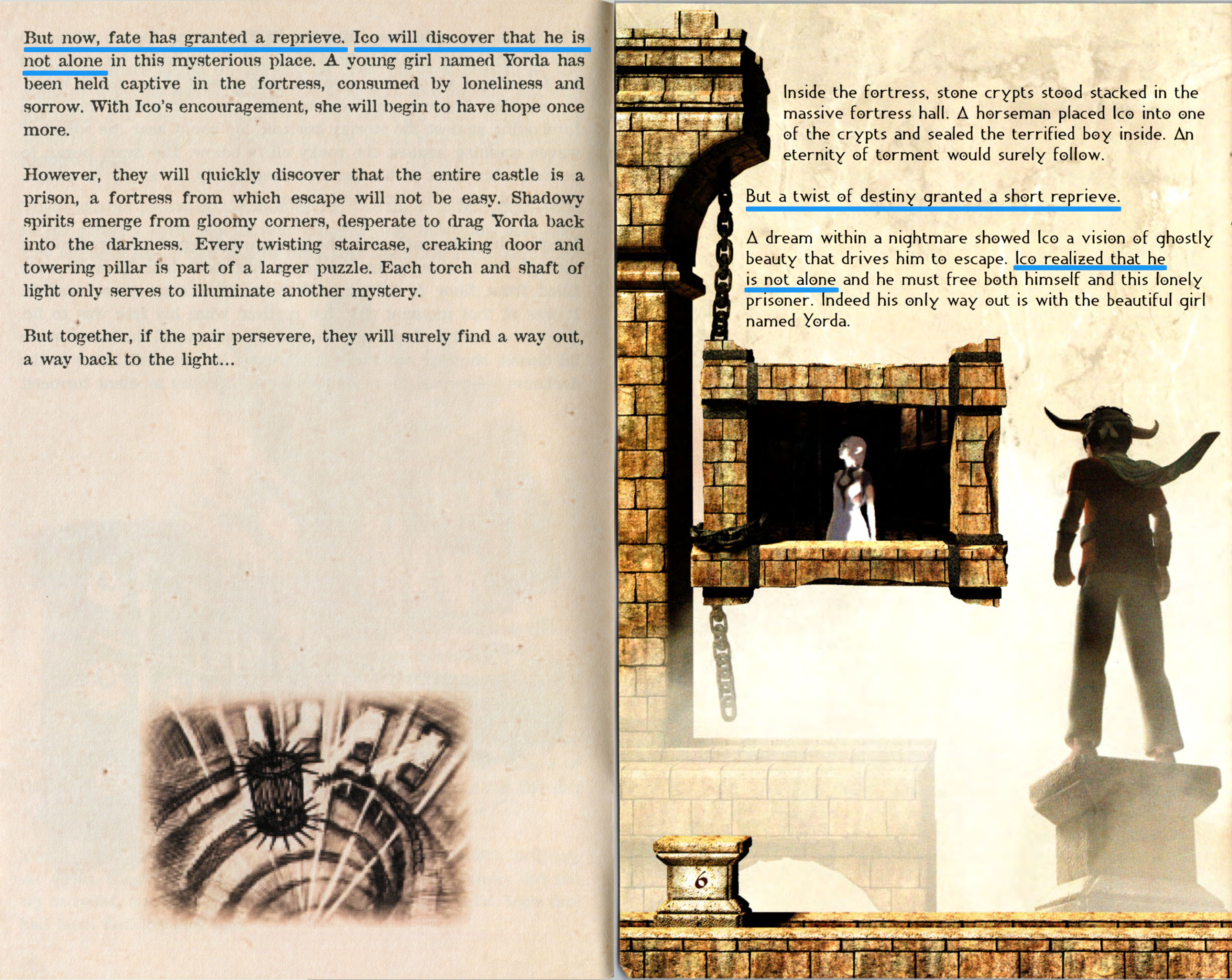
No comment.

One difference you're sure to notice between these manuals is that the EU manual works hard to exclude all direct references to The Queen's character. And this extends to avoiding terms like 'princess' for yoruda.
The NA manual's line
"many escape routes are hidden magical portals that must be opened by complex actions"
is really strange. It does not align with the final product by any interpretation that I can think of.
Additionally, the red highlighted line on this page opts to replace the line
"Solve the puzzles or join the tormented spirits forever"
which was a very prominent motto of the North American marketing material. But seeing as that phrase was not used for any other market, I could easily see it being an SCEA invention. Though I have no further evidence than that.
The slogan could have also been removed for the same reason as The Queen's passages: To avoid hinting at late game reveals, such as the nature of the Shadows.
[Note: After this, you may notice I skipped a few pages in my analysis. They were purely instructional controls, and thus had a great excuse to be exactly the same between manuals, regardless of anything.]

"When e-koʊ and the girl reach a new stage in the journey, you are shown a glimpse of important elements as the camera pans around the new environment. These views hint at what is necessary to complete part of the escape"
The only areas with camera cutscenes displaying the new environment are Old Bridge (zoom out), Graveyard (pan across layout), East Arena (highlights the sword stuck in the closed aperture), and the 2nd Act version of Cogwheel (pans up to high platform and the waterfall).
These few areas probably shouldn't warrant a dedicated blurb in the manual. However, sequences like this were said to be more prominent in the E3 2000 demo.
We can actually see just a small moment of camera movement in this rare E3 2000 footage, as e-koʊ enters the Chandelier area for the first time. Unfortunately it gets cut off very early, but if you look to the rare stage intro in the final you can see that the camera motion is similar.
"Also, using the game's graphics engine, the camera travels to places to show you what needs to be done or, what door your completed puzzle just opened up."
-Douglass C. Perry, ICO Preview, published June 14th, 2000

I assume the 'L2 to zoom' instructional difference was a simple mistake on SCEE's part.
After all, the game's Camera Zoom feature was still being developed in the earliest retail demos, and seems to have been tied to R2 before it even properly functioned.
(At that time, it instead locked the camera to its default angle, preventing you from manually turning it so long as R2 was held down.)
"Peer into the gloom or use a torch to discover useful escape routes that might be hidden in the darkness"
Perhaps I'm taking this too literally, but the game does not ever require you to use a torch in this way. In fact, torches only increase the brightness/visibility of the character models. They do not affect environmental lighting. A torch, thus, can't make a dark area brighter. Also, very few entryways are actually obscured in darkness, especially not for the sake of an intentional puzzle.
Again, this could just be a flavorful description. But seeing as it's immediately followed by an actual fact (being able to view environments that you'll later visit in the distance), I won't take any risks.
Also, you're going to notice it seems the manuals are really fond of the word 'escape', never once do they use a synonymous verb phrase like 'flee' or 'break free' or 'get out'.
And 'escape' (逃げ) is very often used in conjunction with a word indicating a path (道): 'escape route', 'avenue of escape', 'a way to escape'...
With a critical lens towards language, I think it's clear the Japanese source document frequently utilized the term「逃げ道」which, turning back to early 2000 Japanese-English dictionaries, is typically very restricted in terms of listed translation.
The NA exclusive "The Queen and The Princess" section has a lot of confusing statements about The Queen's abilities.
"She has the power over body and soul of any who enter. Like her underlings, the Queen can take pure spirit form. But she also assumes human form by inhabiting a body"
These statements cannot easily be inferred from the content of the game.

"yoruda may occasionally become disorientated and wander away"
I don't know whether this does or does not conform to the content of the retail releases.
I mean, by this description, is the manual suggesting she's meant to look especially dazed or confused as she moves aimlessly? That would contradict the final release. Or is it indirectly speaking of her interest in birds and boxes? Is this potentially just an excuse for existing complications in the AI pathing?
It's unclear to me.
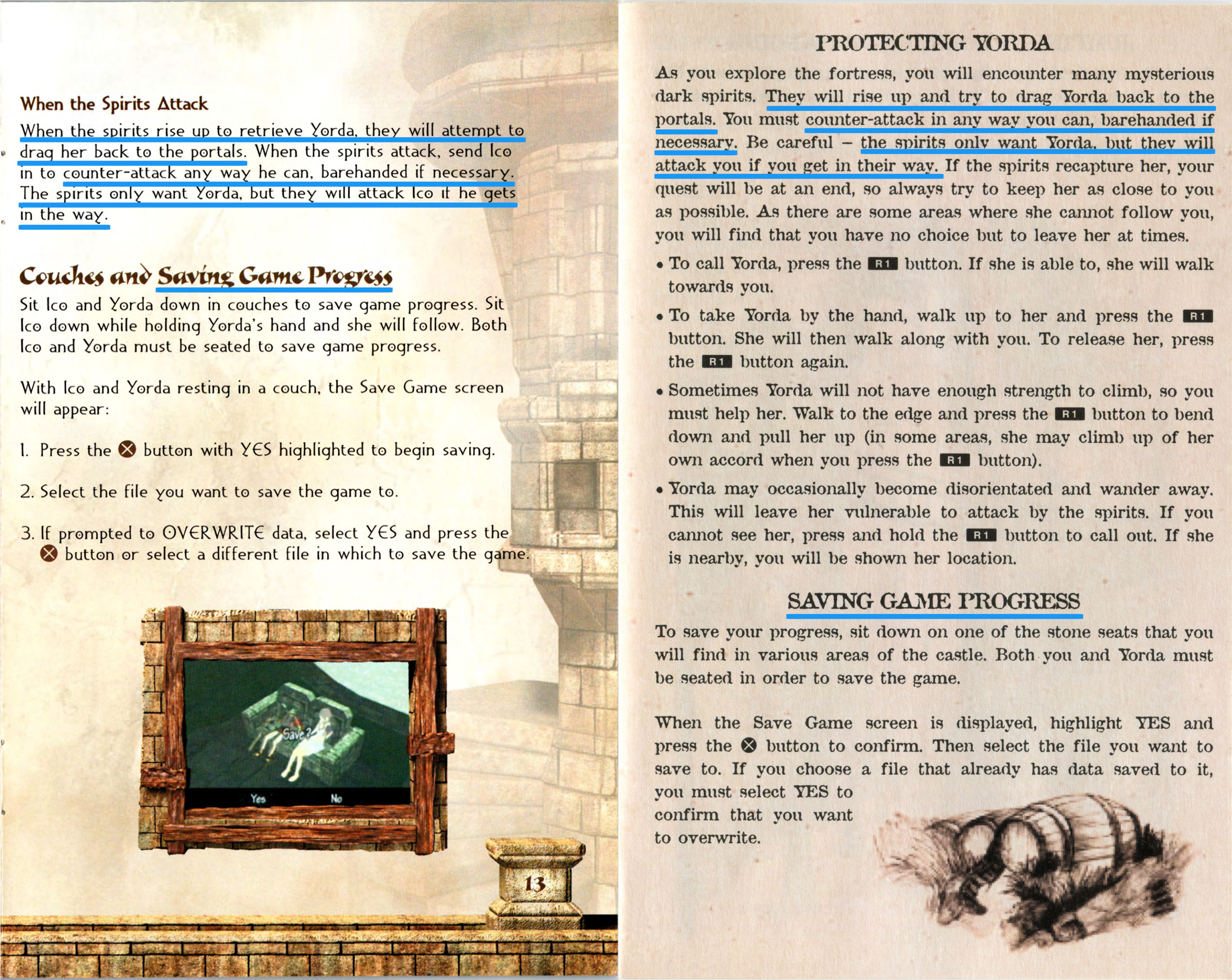
No comment.

No comment.

No comment.

No comment.

No comment.

No comment.

No comment.

"[Idol Doors] are intricately carved with images of the cursed souls who were imprisoned in the castle before you"
This idea is in no way confirmed within the context of the game. It is implied. But to make a statement of it as fact in the manual seems unnecessary and peculiar.
"e-koʊ is mortal and in most cases, cannot open an Idol Door. The Princess yoruda, who straddles the real and spiritual world, can open these doors"
This is similarly not explored in the game. This text is very assured, however. There's no framing this as a possibility or as guesswork. The author is positioning this as a fact of the world presented, though there is no visible evidence or strong implication of it.
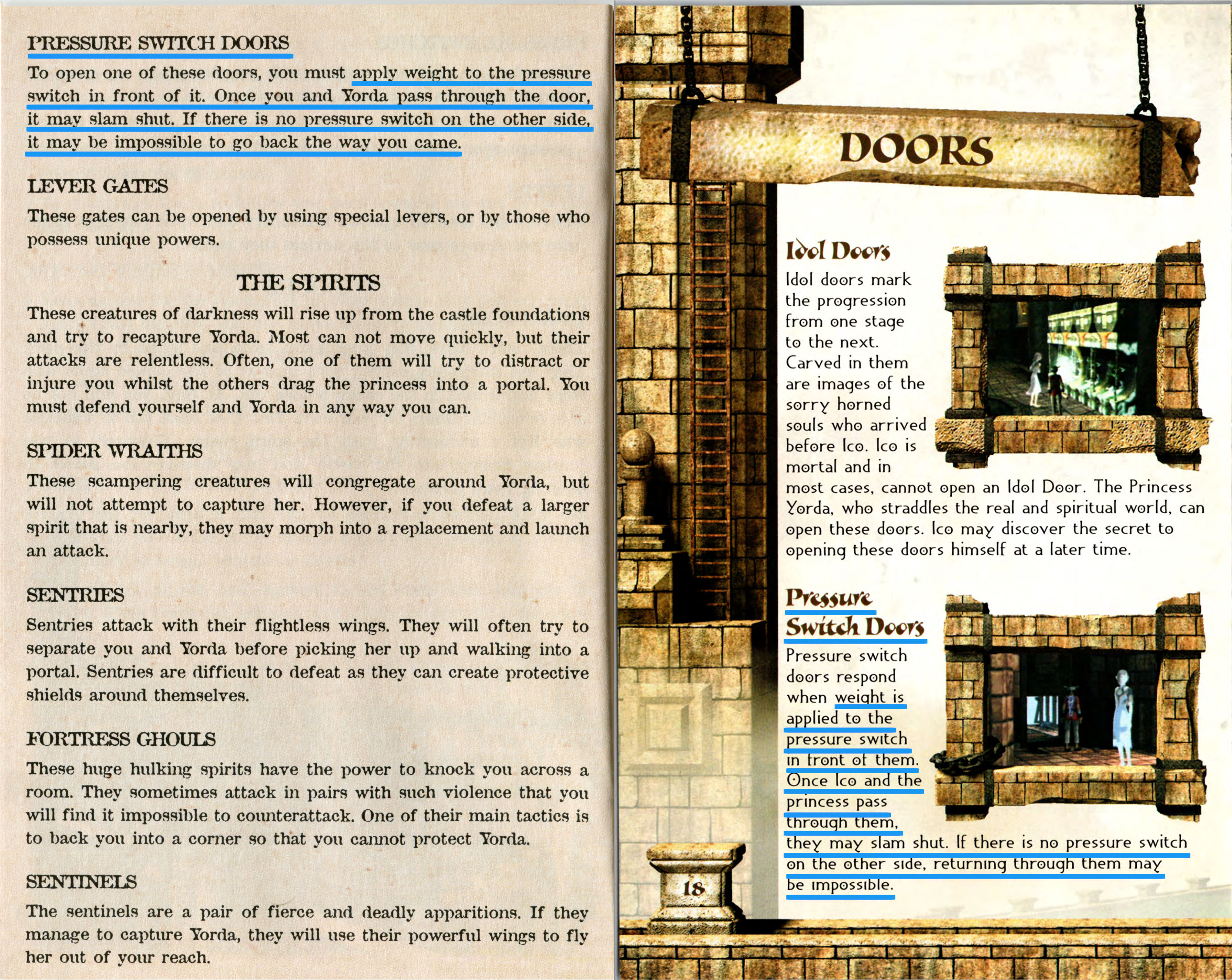
"If there is no pressure switch on the other side, returning through them may be impossible"
It's interesting that the manuals suggest you won't be able to return through a certain pressure door, and it frames this penalty as a result of no corresponding switch on the inside. They're obviously referencing the pressure switch entrances to the East and West Arenas. You cannot leave those areas until you open all the circular crest windows.
However, it is not accurate in the specifics. In both buildings, there is only a switch on the inside, which triggers the door to close behind those who have entered.

Nothing out front.
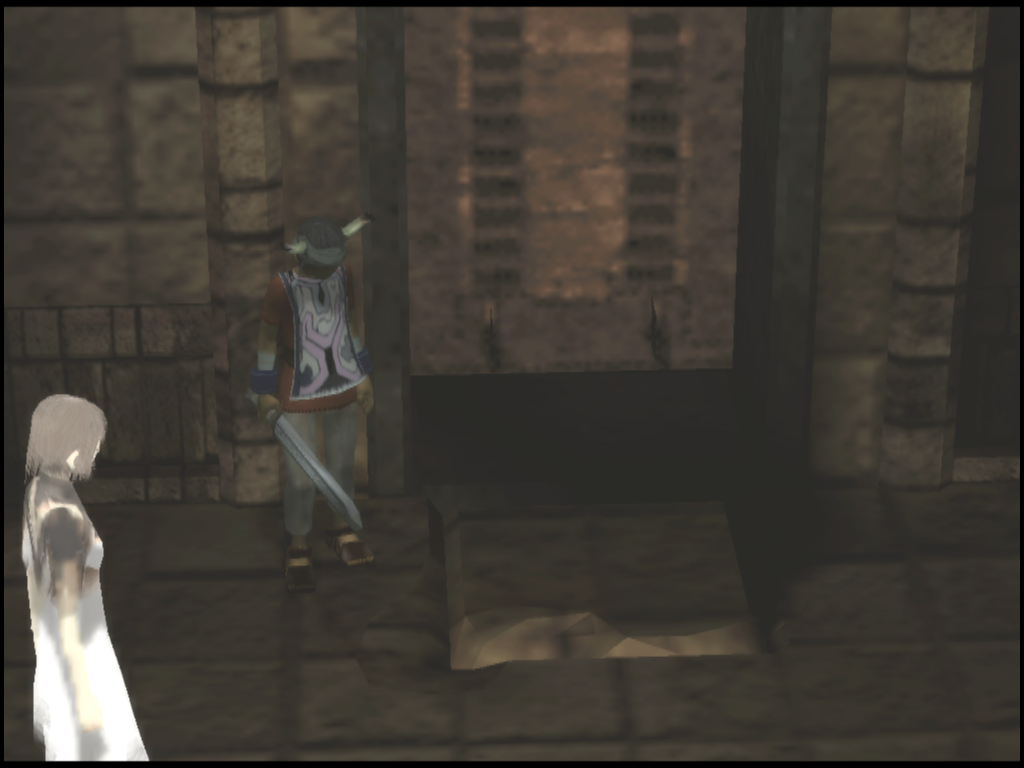
A plate that stays pressed inside.
However, counter to expectations, this door will open again, and you can go back through it. It's forced to always stay open once the arena's sun reflector is directing sunlight to the Main Gate.
This specific inconsistency between the manual description ('returning through may be impossible') and the game might not have been notable, if not for the fact that we have concept art discussing this aspect!
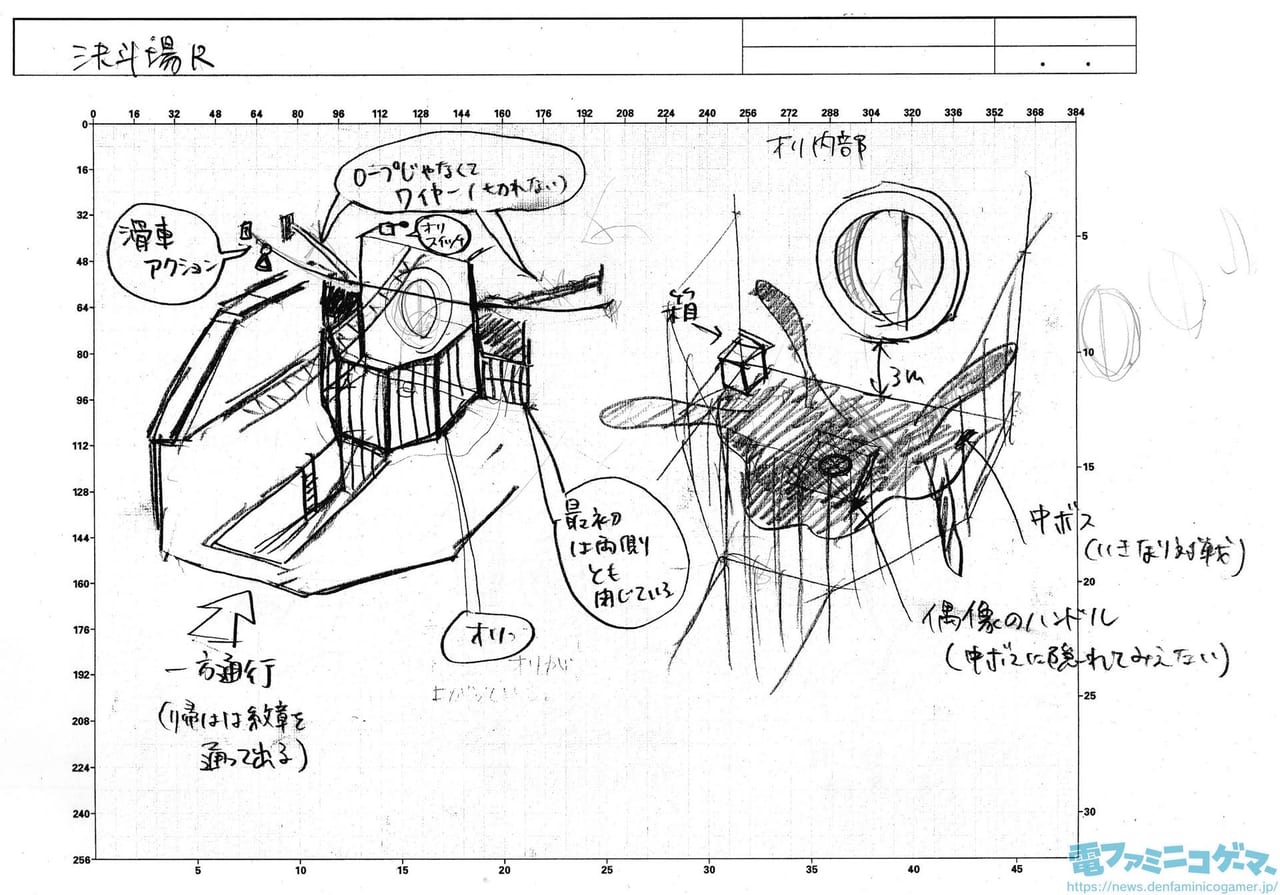
In the bottom left, there is a note saying:
一方通行
(り帰はは紋章を通って出る)
English Translation:
"One-Way Passage
Return by leaving through crest"
The intention, from the concept phase, was that the door would remain closed, and players would be required to leave through the window. This concept matches the manual more closely than the final game, which presents both the window and a re-opened door as potential exits.

The 'Lever Gates' section is possibly the most perplexing entry of both manuals to me.
What does the EU manual mean by special levers? Why use the term 'Gates' rather than doors? Is it talking about the Main Gate?
It is a very rare feature of the castle that can be activated/controlled both by characters with special powers (The Queen and yoruda) and by e-koʊ through the operation of various mechanisms. The NA manual does also describe the Lever Gates as 'huge' which isn't exactly a fitting word for your average door passage.
This is also the only part of the NA manual that uses the term 'gate' for anything, and that's nearly true of the European manual too. The only other time that the EU manual uses the term is in the backstory segment, for the line:
"Ignoring his desperate cries, the horsemen dragged the terrified boy through the fortress gates and into a vast stone hall"
But even so, the Main Gates are activated by the sunlight reflectors, not levers? So why call them Lever Gates?
After struggling to think up a reasoning for why this description matches more closely with the Main Gate than anything else, my best guess is that this could stem from a poor translation of the section's header.
If this was written in Japanese originally, perhaps it was written as「レバー門」or「レバーゲート」?
(Note:「レバー」= Lever. This is not to be confused with the homonymous/homophonous katakana spelling for 'liver':「レバー」)
I think that possibility is the easiest way for a translator to come up with, and stick to, the word 'lever', as opposed to switch (「スイッチ」). And if that's the case, there's a potential means to tie the Main Gate to the concept of a 'lever', because Japanese speakers have a secondary association with レバー... it is also a term used for joysticks!--
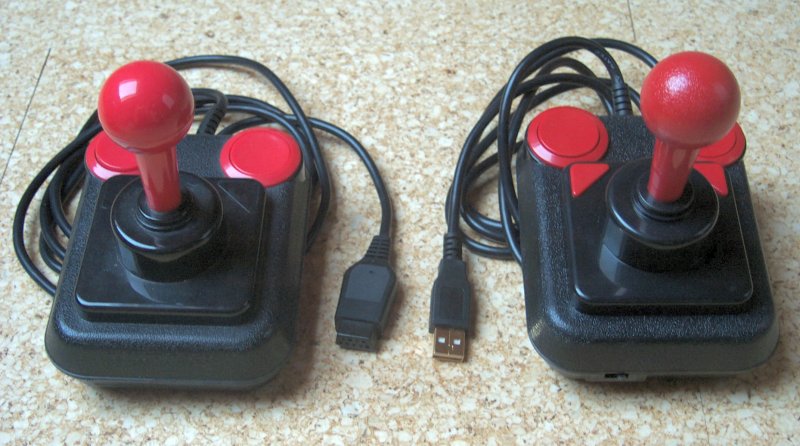
--As well as gear sticks and other rod-shaped input devices for machinery.
And now look at the mechanisms that take in the power of the sun reflectors.
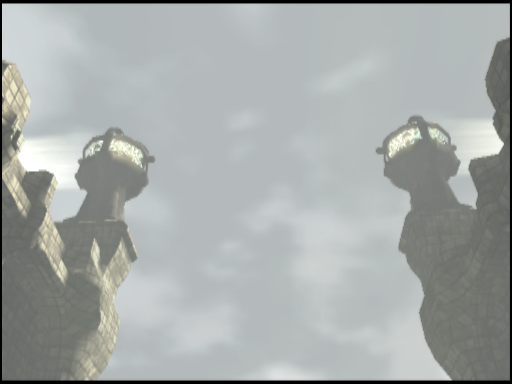
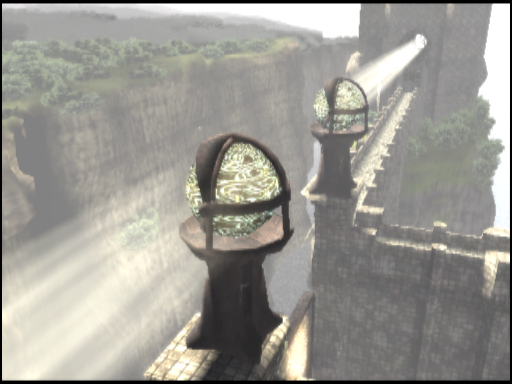
Though they do not move like real machine levers should, I could easily see an arcade joystick being used as a visual comparison for these mechanisms. Especially as a placeholder title of some kind.
I politely reached out to former Team e-koʊ 3DCG artist, Zackmann, and asked him about this topic. He noted that things directly related to the goals/progression of the game were given proper names by the planning team, and that, as a member of the art team, he did not know what these specific mechanisms were called. He mentally grouped them in with the other elements of this puzzle as one big "reflection device" (反射装置).
As a complete aside, he mentioned a specific term he recalled using was "parabolic antenna" (「パラボラアンテナ」) for the sun reflector itself. And that description is visually fitting! But one early concept piece for the reflector (designed by a yet unidentified planner) labeled it as "Solar System" (「ソーラーシステム」) which seems to be in reference to the super-weapon that reflects concentrated sunlight in Mobile Suit Gundam.
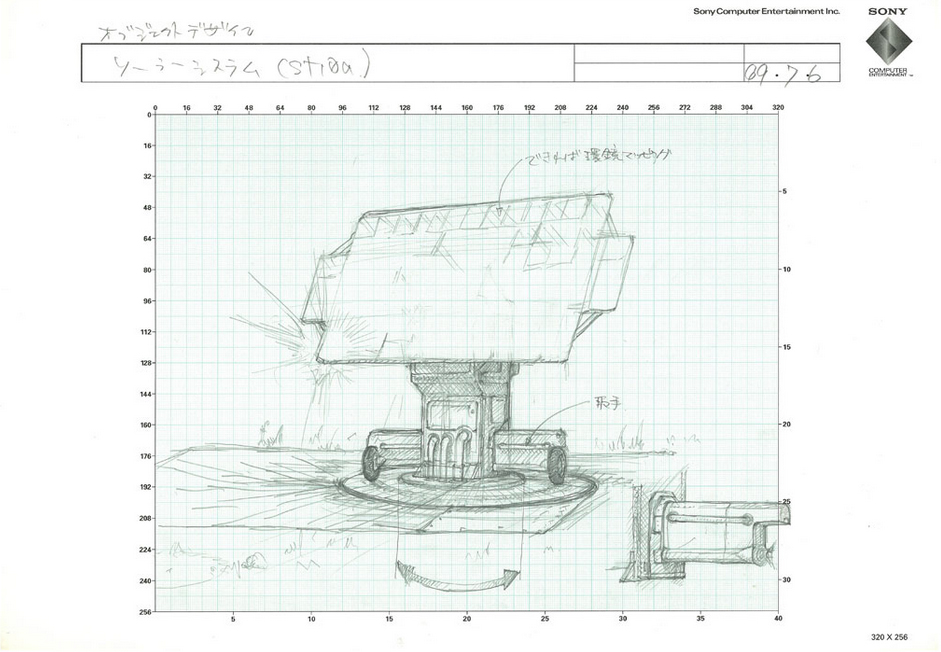
This example hopefully emphasizes how inconsistent terms could be between sectors of the e-koʊ Team.
Anyway, when I further explained the strange entry in the English manuals, Zackmann said that this was the first he'd heard of it, and he also found the header of 'Lever Gates' strange. He noted that they usually would call a switch e-koʊ could use in puzzles as: 「レバー」. Though I've summarized the main points in English, you can examine the full exchange .
Alternatively, I could have been on the wrong trail all this time, and by 'special lever' the manual somehow does intend to reference the sun reflectors? I apologize for raising so many questions that I can't properly answer in this segment.
In any case, I find it hard to convince myself that the Lever Gate description applies to anything but the Main Gate.

"Most are slow but all are relentless"
While speed is somewhat relative, and e-koʊ can almost always outrun the Shadows. I find it peculiar that they would claim most spirits can't move quickly, and go so far as to use the term 'slow', when so many of them are capable of flight.
"Often, one of them will try to distract or injure you whilst the others drag the princess into a portal"
This is the one place where the EU manual slips up and refers to yoruda as a princess, thus potentially clueing players in to the existence of The Queen. This error implies that the EU manual also used 'the princess' as a descriptor early on, and they manually had to change each instance whenever they decided to remove all references to The Queen.
"However, if you defeat a larger spirit that is nearby, [Spider Wraiths] may morph into a replacement and launch an attack"
The listed cause of Spiders merging into a bipedal enemy is not adequate, since Spider Shadows only merge when they make contact with yoruda as a group of five. However, there is truth to the idea that they are connected to a nearby Shadow Creature that they might 'replace', but it's surely not something you could gather from mere observation.
It took the community until late 2025 (24 years after the game's release in North America) to realize that Spiders actually ignore yoruda in the initial portion of any fight. At the start, their group movements will instead trace those of a bipedal Shadow Creature, who acts as their programmed leader. A debug mode feature was the only way anyone was clued into this.
Footage captured by Jaikhay and originally shared via Discord.
While in this phase of the fight, even if yoruda is closer to the group than their leader is, the Spiders will still refuse to switch priority to her. It is only after their leading Shadow either dissipates altogether, or retreats into a Shadow's Nest, that a group of Spider Shadows will begin closely trailing yoruda. They never return to following a leader after this.
In this way, they only activate after a Shadow is 'defeated', bringing truth to the claim.

Buckle in. There's a lot to unpack here.
This segment of the manual is really what made red highlights neccessary for this analysis. When you look at the very few examples of red text before this, you may notice something unique about this instance:
Never before have SCEE's additions intentionally replaced information covered by SCEA.
Even the shift away from "join the tormented souls forever" was just an altered slogan, that barely contained real, pertinent info.
I found it odd. Especially because the lines that were replaced seem so inoffensive. Why couldn't some have been left alongside, or incorporated into, the additions? SCEE has been content to copy nearly everything! Avoiding late-game spoilers seemed to be their only reason to completely remove certain segments...
But a passage like "Other Spirits", has such an absurdly vague description that it doesn't really say anything! And they've copied much stranger info without a second thought.
I think they needed a strong motive to remove this, rather than let it be.
But what could've forced their hand?
We're going to uncover a potential answer for that in a moment, but for now, let's focus on the information that SCEE decided to give in its place:
"SENTINELS
The sentinels are a pair of fierce and deadly apparitions. If they manage to capture yoruda, they will use their powerful wings to fly her out of your reach"
So it seems these Sentinels are generic flying enemies? Hmm.
Odd that Fortress Ghouls aren't specified as flying enemies ('drags the princess away' also implies they're grounded), and they make a point of Sentries being flightless...
"Sentries attack with their flightless wings"
But, from the Trolley stage (the 4th map you bring yoruda to) and onwards, flying enemies are abundant!
Approximately 75% of the game's bipedal Shadows are fliers! So, are all of those enemies considered Sentinels? That seems excessively disproportionate. But again, it's the only entry that makes a point of mentioning flight, as though it is unique to this enemy type...
And a lot of things start clicking into place when you meditate on that fact... and realize that without SCEE's additions, 'wings' and 'flight' are not listed anywhere as qualities of Shadows in the North American manual. SCEE must have realized that the information they recieved was from a time before the Shadow Creatures were capable of flying!
Recall earlier when I said this?
"I find it peculiar that they would claim most spirits can't move quickly [...] when so many of them are capable of flight."
I think this possibility sufficently explains that unusual comment about the enemies moving slow.
And suddenly, I find it very likely that line about 'powerful wings flying yoruda out of your reach' was an observation of finalized design that they either included on their own, or were asked to include, so players could be properly informed. That explains at least one of this page's additions.
But... I suppose that makes it all the stranger that The Sentinels are referred to the way they are.
"The sentinels are a pair of fierce and deadly apparitions"
Note that the Sentry description has a key grammatical difference from the one above:
"Sentries attack with their flightless wings"
'The sentinels'... vs 'Sentries'... Why add 'the'?
Even the SCEA manual started the Spider entry with 'Spider Wraiths' not 'The Spider Wraiths'.
I only make a big deal of that innocuous article's presence due to the next oddity of this sentence:
"a pair".
Not "They sometimes attack in pairs", as 'Fortress Ghouls' specifies.
No, they are just said to be a singular pair of fierce and deadly apparitions.
Addendum: This is proven furthermore by other language manuals made under SCEE! The Spanish manual says:
"Son dos feroces y mortales apariciones"
Everything about this sentence implies 'The Sentinels' are a distinct duo that you must face simultaneously. Which doesn't match at all with the rest of the entry... (Again, flying enemies compose three-quarters of the game's encounters!)
But even setting aside that imposed sentence about flying, it's not like there were ever a pair of Shadows that were the only opponents on the field, and were plainly distinct from all other enemies, right?
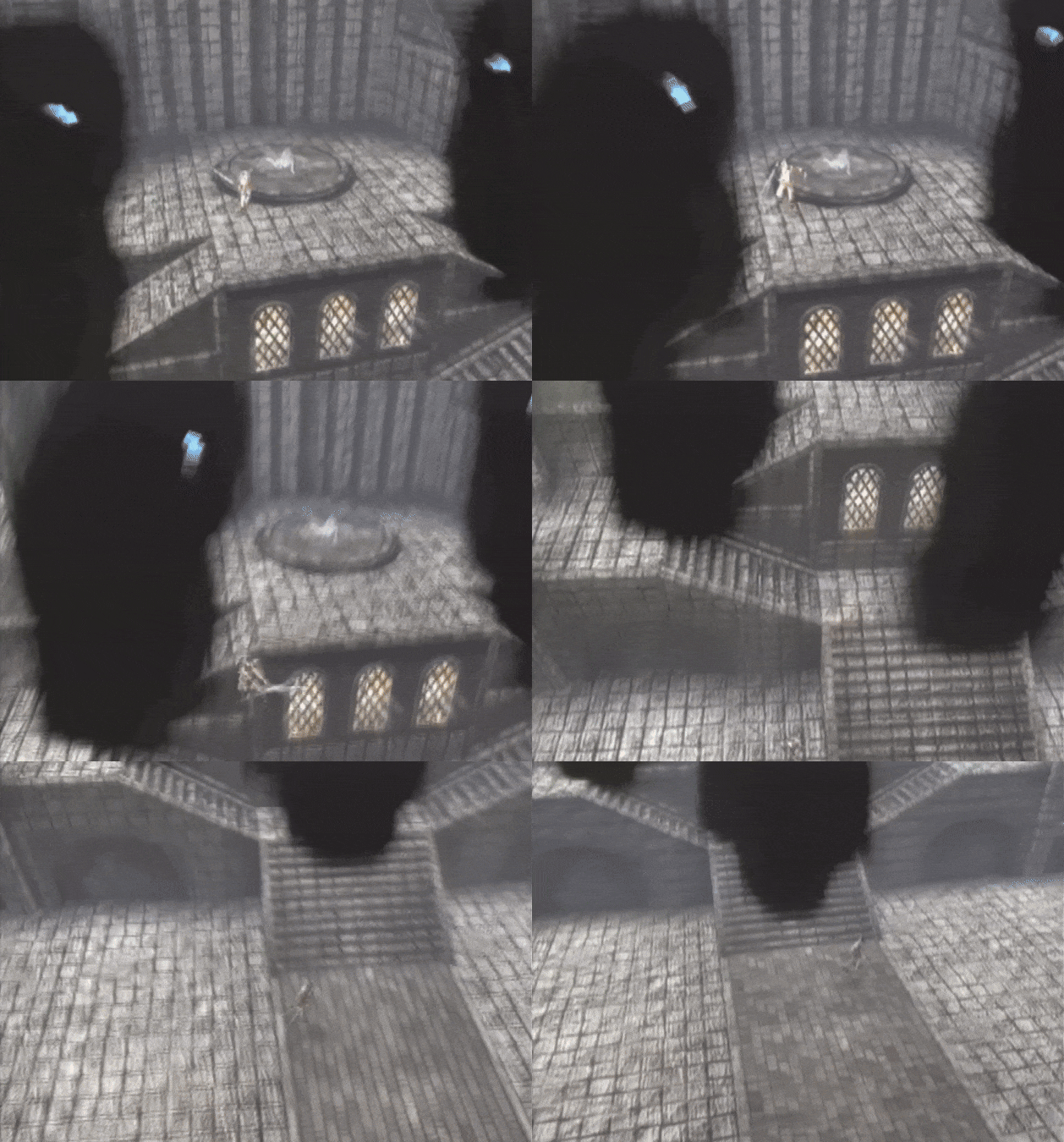
...What?
Yes, for those not yet aware, this clip comes from the very same PlayStation Underground interview with Kenji Kaido I mentioned at the start of this page. An oddity to those who noticed - the video footage for the game was taken from a number of prerelease builds.
Because the video contains a lot of obvious debug manipulation (e-koʊ is not meant to have The Queen's Sword in some of those stages!), I once mistakenly believed these scaled up enemies to be a goofy experiment between devs, and not a serious consideration for the game's development.
I was very wrong. There's actually a ton of evidence for these enemies left behind, as it seems they were the original concept for the combat section before the final boss! I'm putting additional details under partitions for those who don't feel a need to delve too deep into this.
In all likelihood, these are our Sentinels. They certainly look like a pair of fierce and deadly apparitions! And because of that, we can build out a better understanding of the motivations behind these altered passages.
SCEA: Likely warned in advance that The Sentinels' information from their source was outdated, they covered the entire entry up with a very vague description alluding to other types of spirits (which, consequently, stands out for being so vague in a manual that otherwise does not care about spoiling late-game reveals).
Though I find it funny that they reused the term 'apparitions' anyway. A very subtle tell.
Why they didn't get more specific, despite being sent a screenshot of the updated fight, is not clear. But my guess is that they lacked confidence in accurately summarizing the behavior of these enemies and didn't want to take risks.
Later on, Prima Guide writer Greg Off would fill in this gap by choosing to abandon the vague 'Other Spirits' entry and write details on the 'Spirits from Generations Past' based on what he observed actually playing the game.
This reinforces the idea that 'Other Spirits' was always alluding to that specific Shadow encounter.
SCEE: Trying to address the lacking references to flying enemies, they take the header name and initial line about The Sentinels from the Japanese source document, and follow that up with the simple observation that inspired their concern. They neglect to alter the grammar of that first line, creating a textbook example of Editorial Fatigue.
[Note: This theory only works if SCEE was not solely relying on the North American manual's info. This can only work if both branches recieved the same source document.
In that context, the subtle alterations to sentence structure and vocabulary are likely not poor attempts at hiding plagiarism, but rather, different ways of translating the same Japanese text into English.]
I believe their original Japanese name could have been 衛兵, judging by the Spanish version of the PAL region manual, which translates their name as "Guardianes".
In English to Japanese dictionaries, 衛兵 typically has the listed definitions of "guard; sentinel; garrison". At least, that seems to be the consensus for modern resources. However, 'centinela' is not listed as a meaning for 衛兵 in any Spanish to Japanese dictionary I can find online. 'Guardia' is the only listed definition in its place.
If you can believe it, there is still one more thing to discuss about the pages above.
The Sentry enemy listing has its own perplexing contradictions.
"Sentries are difficult to defeat as they can create protective shields around themselves"
There is no shadow type with access to any form of shield in the retail game. Their main defensive tactics are to duck below or fly above. They can also occasionally block unarmed attacks, but none of these are really suitable maneuvers for a description like 'create shields'.
The closest defensive option Shadows recieve (presumably from The Queen herself) is their ability to phase through objects, which only occurs as a diagetic softlock prevention tool.
And not long after writing the words you see above: Something else about the Sentry description began to bother me. A very, very small thread that I drew out, and unraveled into an answer for my questions about this 'shield'.
We already established a potential reason for SCEE to erase the majority of the original 'Sentinel' passage: It was outdated information, and they wanted to fit in their new info about Shadows flying. So why was the line-
"Sentries are the size of a grown man"
-also removed in the process? It didn't add up for me, at first. What about this statement is outdated? I mean, aren't all bipedal enemies about the size of adult people? It's not really distinct, is it?
I found myself thinking about the name as well. Compared to the other non-boss enemies, it lacked a certain dramatic flair.
Spider Wraiths!
Fortress Ghouls!
Sentry. A word just meaning: a guard. Nothing spooky or special about it.
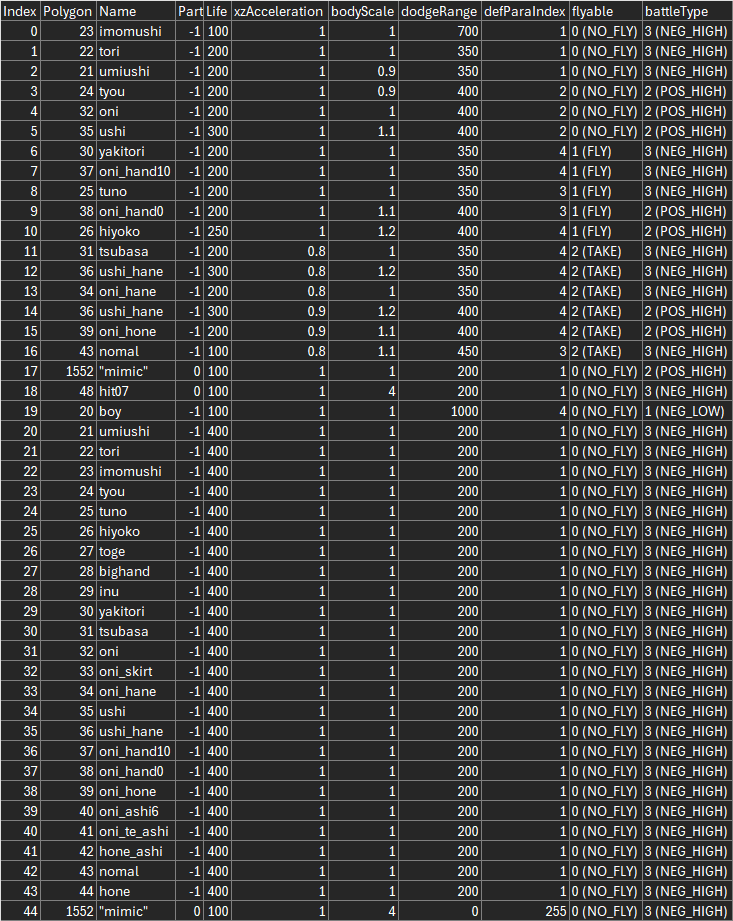
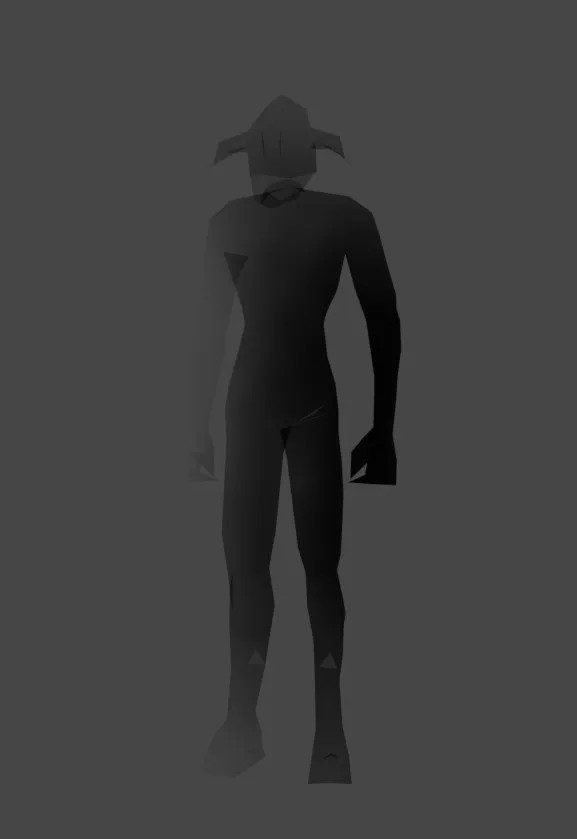
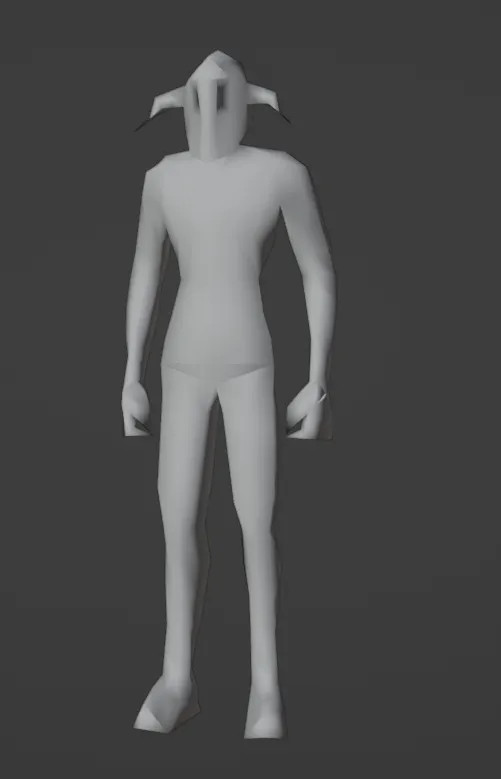
And I suddenly recalled 'enemymodel_deja'. An unused enemy design based on one of the original Castle Soldier enemies from the PS1 iteration of the game.
I say 'based on' specifically because it is not an exact copy. The model has been altered to feature these strangely tall eye holes (today I learned their technical term is 'sight') for the helmet...
ASapphicKitsune
@asapphickitsune.bsky.social
enemymodel_deja
The largest remnant of e-koʊs Castle Soldiers.
I only just noticed it has unique vertically oriented eye holes in the helmet, that's different than how the standard soldier actually looked in footage we have.
— August 9, 2025
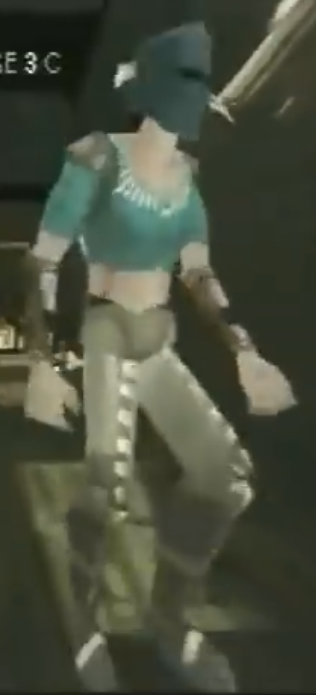
deja is an unused model, with no listing in the enemyKind. It is present in the files of all but the North American release, and is loaded into STGDEJA.DF, the map file for e-koʊs dream sequence. But it never appears to be called upon, even when looking out of bounds. So we have yet to determine why it was included.
Even so, this clear connection to the déjà vu stage (also written in the model's name) lead community members to comfortably assume this model was strictly made for that map. I had believed the same.
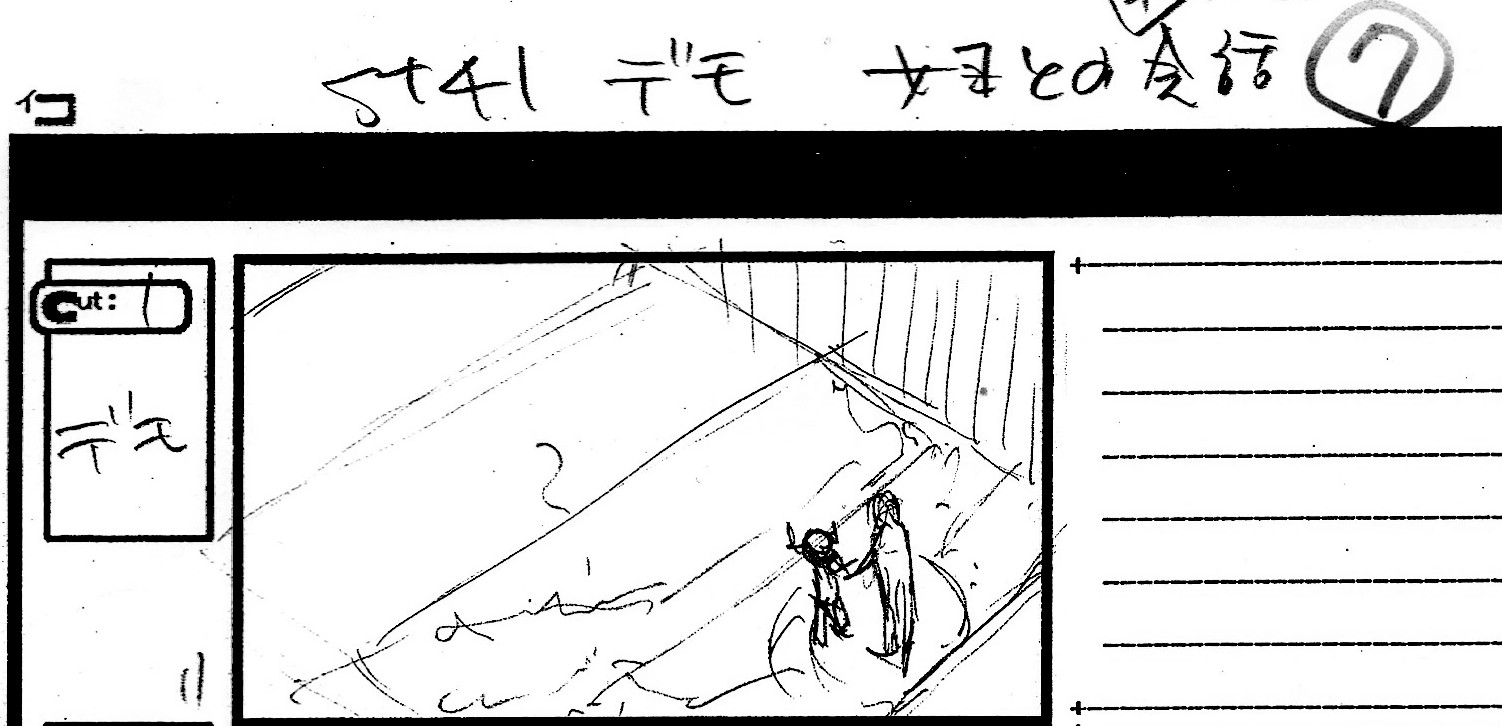
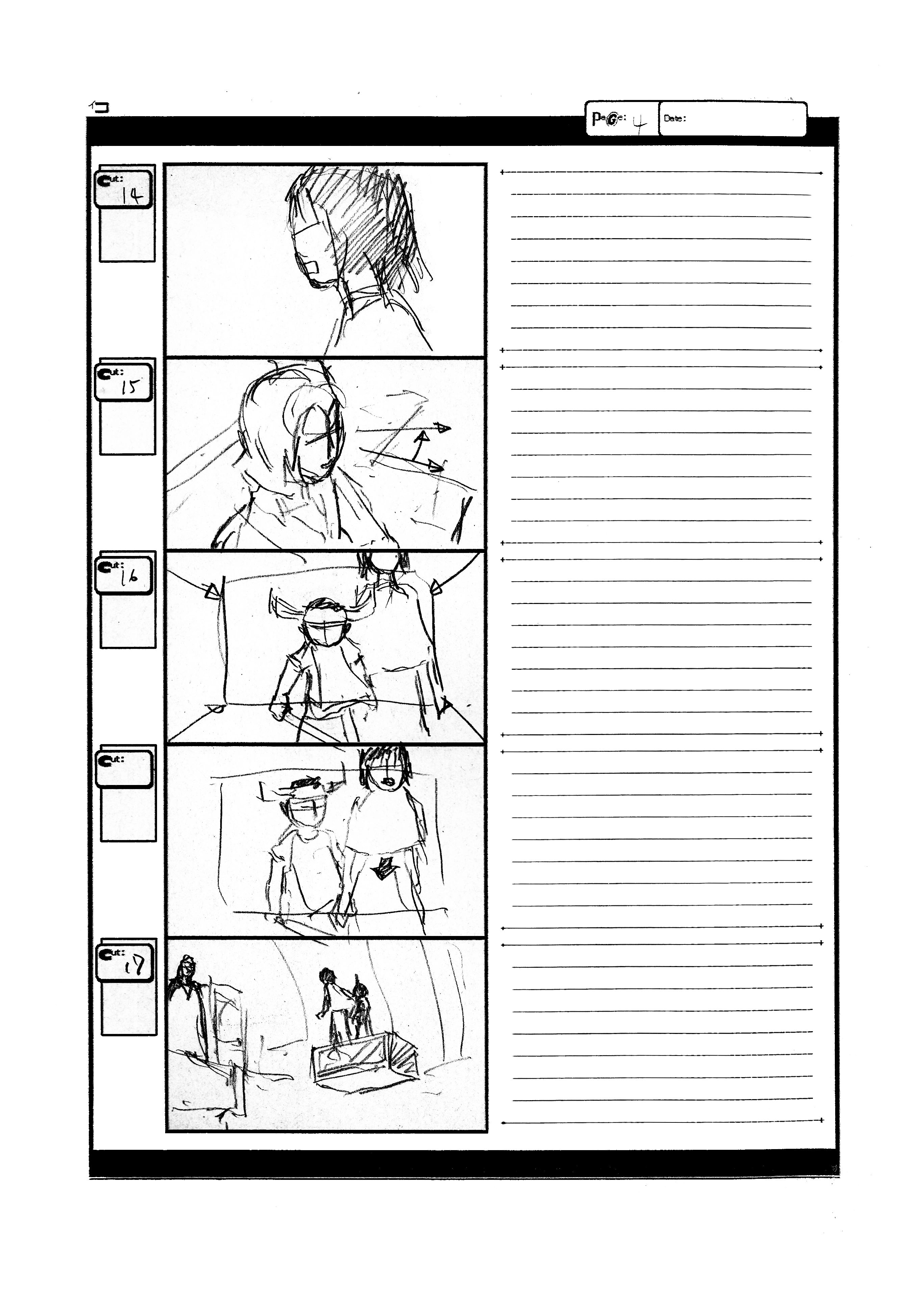
However, faced with SCEE's seemingly unprompted change to the Sentry description, the soldier model alteration, and enemymodel_deja's vague role circling in my head, a wild hypothesis began to emerge. I followed my hunch to a set of storyboards, shared online by 電ファミニコゲーマー (Denfaminico Gamer) and featured in the Japanese exclusive 'World of Fumito Ueda' book.
There's a segment of storyboards for the dream sequence among them, and it has direction notes scrawled in the margins! I wanted to investigate them for any mention of a 'soldier' or a 'sentry'.
I did not find such a written reference. But... I found a cool detail that didn't make it to the final game.
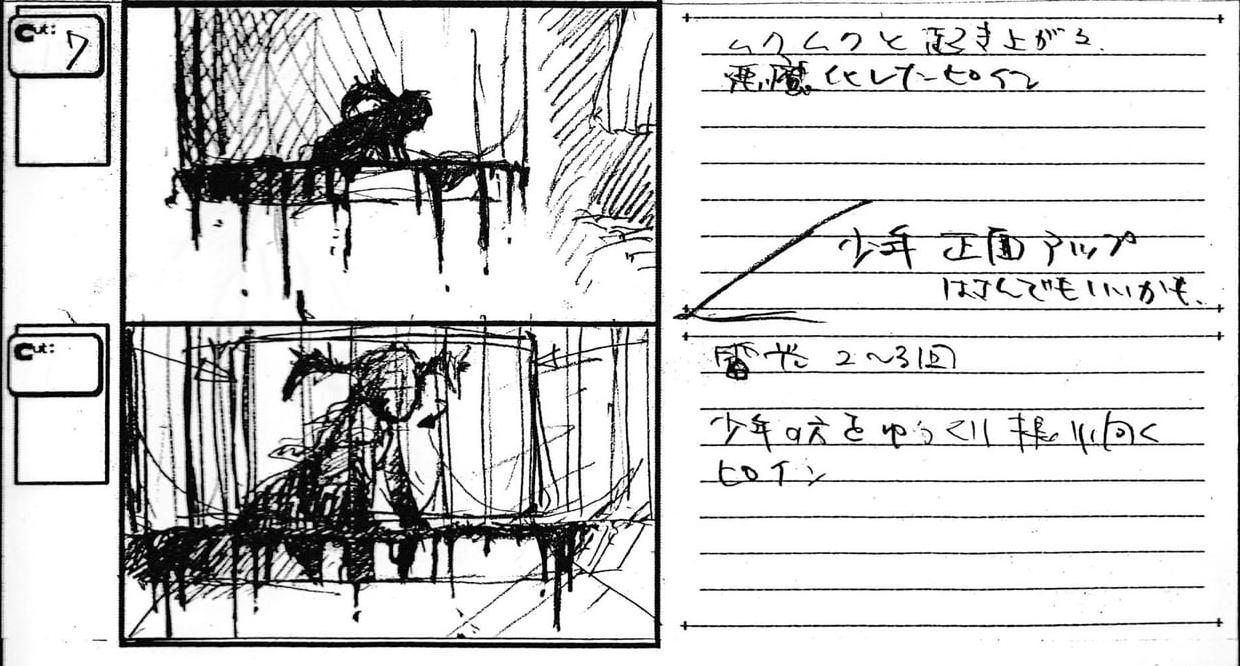
Do you happen to recall that unsettling moment when a shadowy black ooze fills the cage in e-koʊs dream? It churns out the ends and drips down to the stone floor, creating an ink-blot-ish pattern.
Well, according to the margins here:
ヒロイン部屋下層に落ちる
※
後にオリが下りた時に
ここから敵が出現。
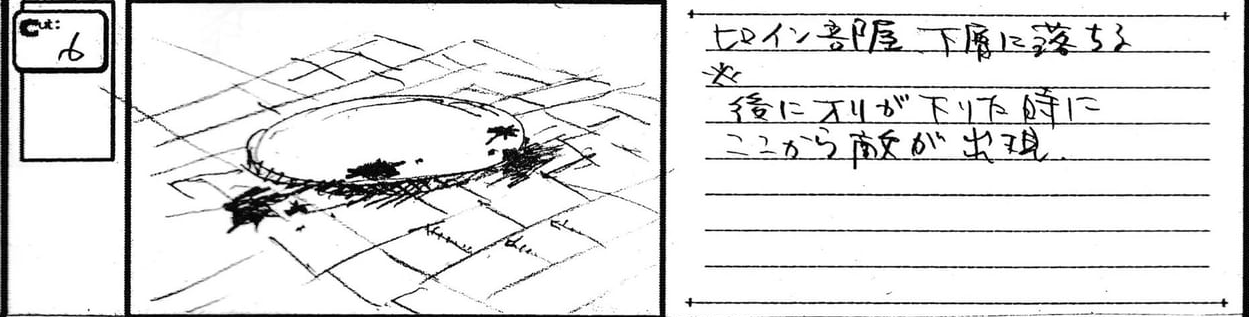
English Translation:
"It falls to the lower level of the heroine's room.
* Later on, when the cage has lowered, enemies will emerge from here."
And, as promised, we can see that occur on later pages.
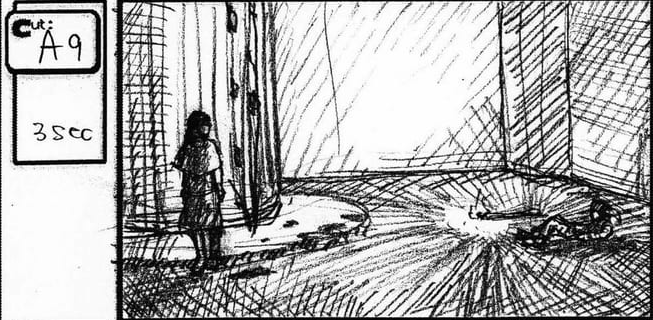
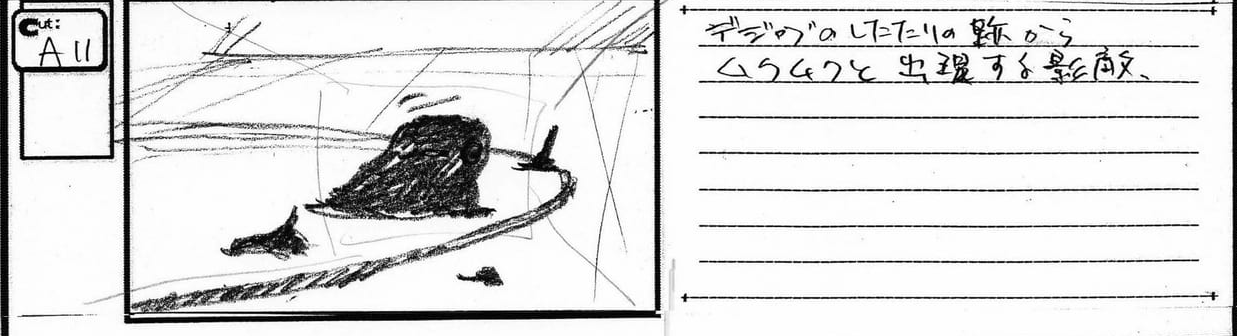
These margins read:
デジャブのしたたりの跡から
ムクムクと出現する影敵
English Translation:
"Shadow enemies slowly arise from the traces of the Déjà Vu dripping"
It interested me that their foreshadowing in the dream sequence seemed to instantly give these shadows an association with the deja stage and the Déjà Vu term.
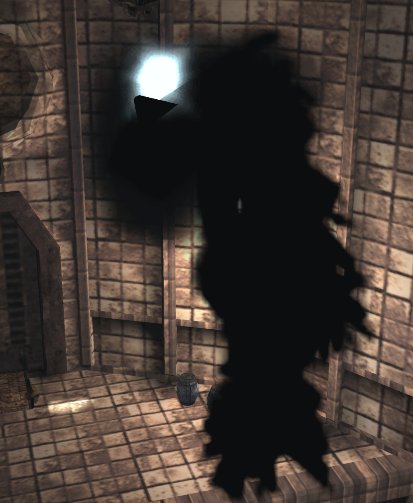
And then I looked close, and I mean really closely, at the Shadows that Ueda drew here. You need to look within the shading of the figure that grabs onto Yorda, to see which parts are darker than others. See the shape of their down-turned horns and the black of their face?
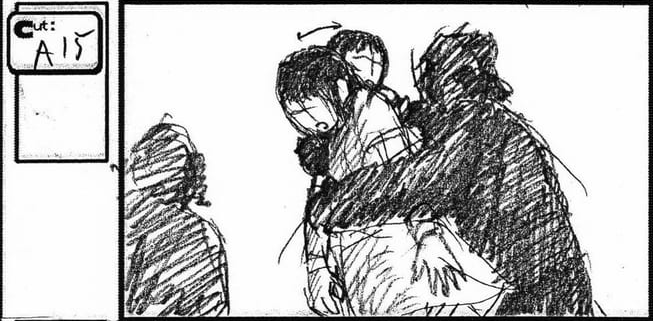
Initially, I thought this matched enemymodel_deja to a T. But, on closer inspection, the helmet has an opening for the mouth, in a shape that actually resembles a different PS1 enemy, the sergeant!
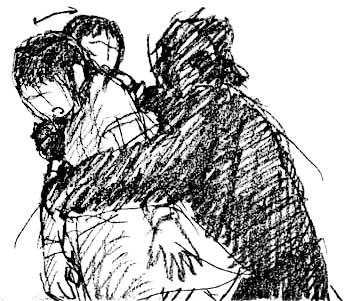
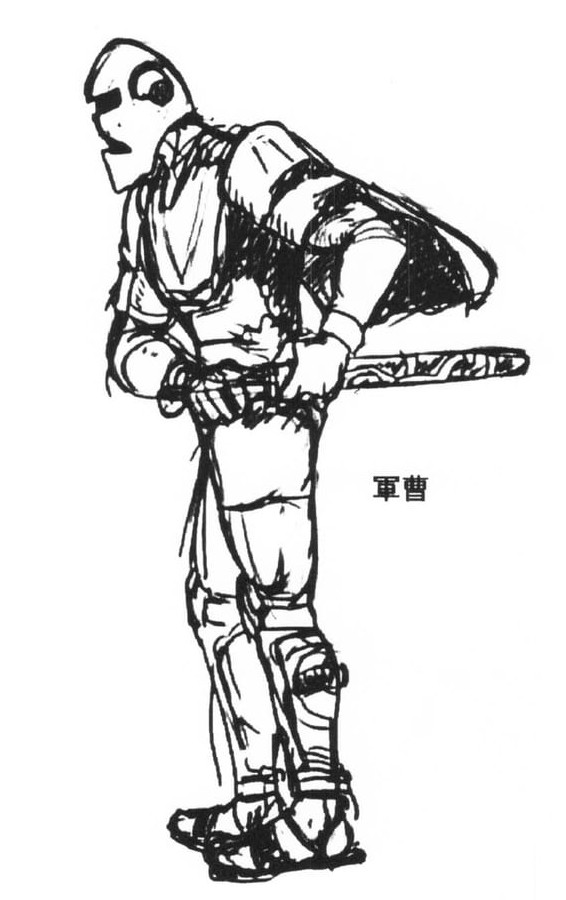
So it's possible that the full set of soldier models could have been reused for these Shadow enemies!
And going back to the line that tipped me off ("Sentries are the size of a grown man"). I think this was likely mistranslated by SCEA, or at least, I don't think SCEE would have reason to replace it if that's truly all the original phrase implied.
I don't think it said that they're the size of grown men, I think it said they have the proportions of grown men!
And the very next thing to catch my eye was a truly rare thing for the storyboards: Gameplay instructions!
The lower half of the margins here read:
Square
ボタンで
角材を取らない状態では体当たり
が効果なし、→ 吹っ飛ばれ
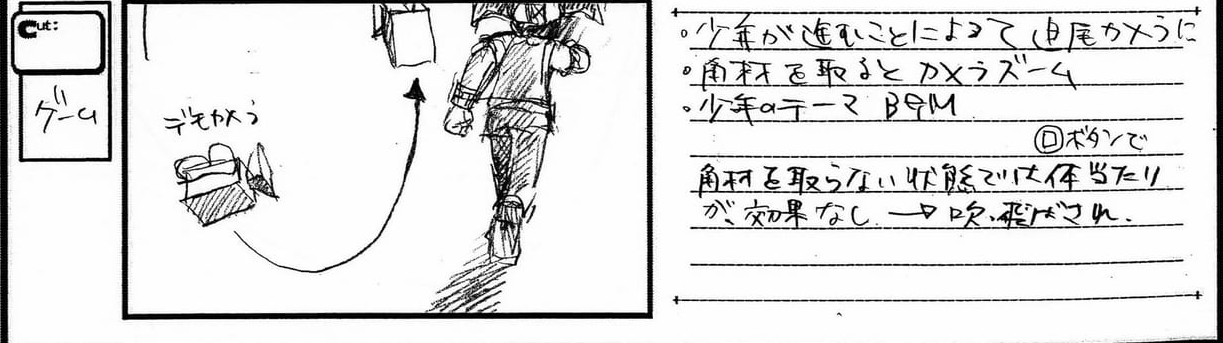
English Translation:
"If you don't take the stick, your ram attack (Square Button) will have no effect. -> You'll be blown away"
I'm not confident in every part of that translation, but I think the idea of it comes through: Attacking without certain weapon upgrades will send e-koʊ flying back from the enemy, automatically. This could very well be that 'shield' they referred to!
And you're going to see even more evidence of that on the next page.

"If you have no weapon, you can still attack spirits by lunging at them with your horns. [...] Weaker spirits will be sent sprawling, but stronger ones may respond by hurling you across the room"
This certainly matches with the text we found in the margins of the storyboard. But this isn't always how the feature would work, and we know this because (after writing the sections above) we found definitive proof of the shield effect, and were able to see how it once worked in the June builds!
These shields do not knock e-koʊ backwards as described in the manuals/storyboard, and they only appear occasionally when e-koʊ makes an unarmed attack.
e-koʊ is normally forced to use the stick weapon from the very start of the demos, so finding this feature was impossible by normal means. It required memory editing, which I encouraged both Jaikhay and Rossy__ to pursue (as I, myself, still have much to learn about it). Once Jaikhay managed to locate the weapon's address, we could confirm my growing hunch.
It's possible that, at the time these manuals' shared source was written, Sentries could have been the only ones with shields and were thus considered the 'strongest'. But if that period of time existed, it didn't last.
In the June demos, every bipedal Shadow has access to a shield, no matter its form.
Though, on that note, take a look at these images of various enemy forms, found in the Official e-koʊ Guidebook:
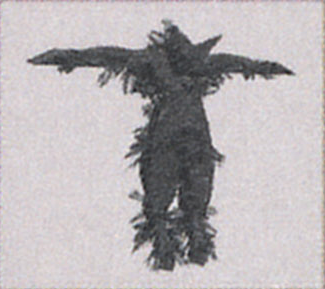
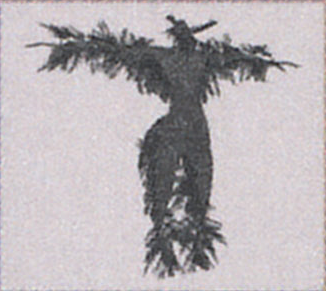
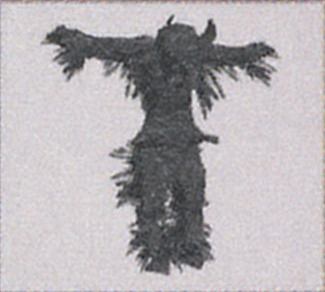
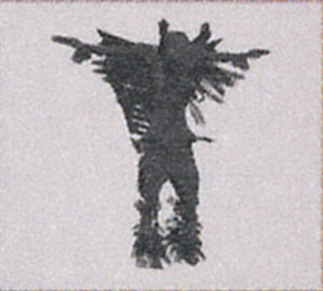
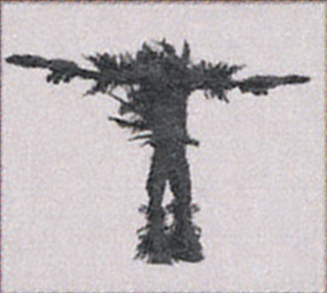
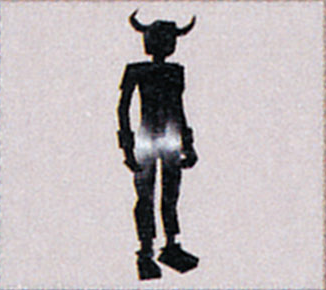
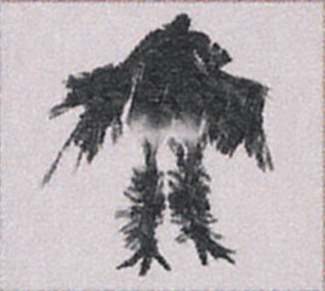
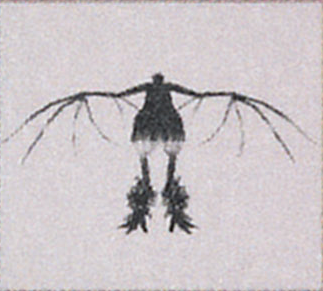
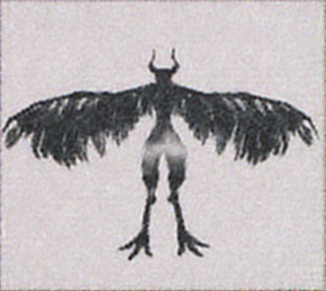
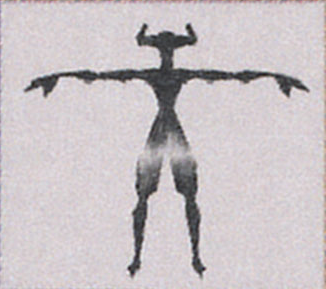
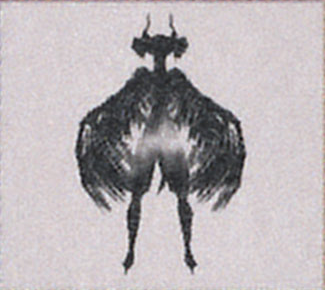
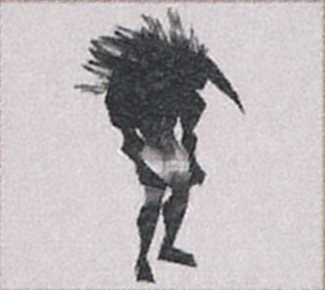
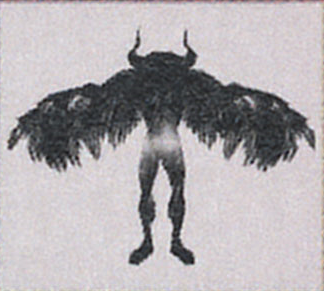
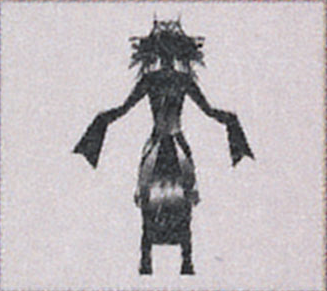
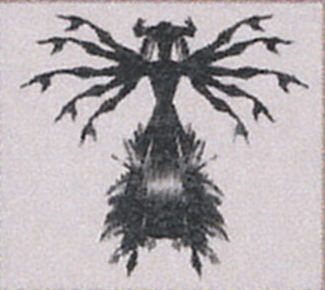
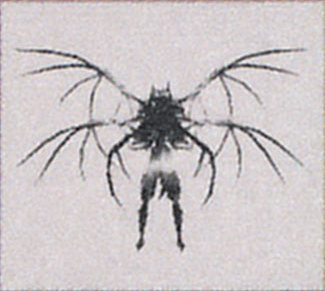
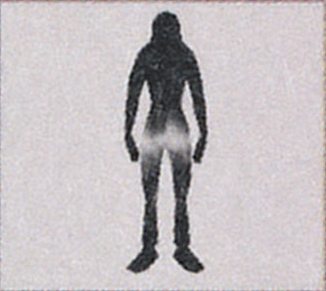
Is it clear why I divided these into two groups?
If you look closely, all the enemies shown in the 2nd group have a strange ring of white at the base of their torsos. This effect has been seen in some prerelease footage from early 2001.
It has come to be recognized as 'guard_black_flash', a texture still found in the game's files.

I don't know when exactly, but at some point this effect left the bodies of the Shadows themselves and was instead applied to "ball_black_flash": the hollow, vertical-oriented ovaloid model for the shield!
That's right, the texture effect used on the shield's model appears to be a carry over from an earlier stage of development. The shield is likely the evolved form of this original flash effect across the body.
The effect on the shield in my footage doesn't quite resemble the gif above because it is, perhaps intentionally, broken in the builds where the shield is functional. The UserSpace (a factor of e-koʊs texture files that could allow for visual movement) was removed for guard_black_flash in June 8th and June 26th's demo builds.
But its UserSpace was returned, and made perfectly functional in the August 2nd demo build, where the shield is no longer used.
This is how the texture is meant to appear (simulated in Blender by Jaikhay):
Returning to my initial point, I think perhaps 'guard_black_flash' was once a permanent physical indicator, used to signal which Shadows could require better equipment to handle. And maybe some Shadows lacked the effect to show they didn't have a shield against any attacks, unarmed or otherwise.
That's why I believe the 5 Shadow types you see in the first grouping of Guidebook pictures do no have the white rings at the base of their torsos.
But! All of that is assuming every picture above was taken at around the same time, which I cannot claim with certainty. If the photos from the first group were taken at a later stage of development, that could also explain their lack of the effect.

While I think many would be convinced, at this stage of my analysis, that there is some kind of Japanese source document both regions are pulling from, I can still point to more evidence of it here.
"e-koʊ can find swords but they must be won by solving a puzzle"
"You must solve puzzles in order to win swords"
The manuals can't seem to agree on whether the subject of 'puzzle' is plural or singular. But we know there is only one key challenge to obtain your first sword in East Arena, and after that they are usually found lying about in later areas.
Could this once again be a case of cut content? Maybe e-koʊ would lose a sword and have to earn another later through a different puzzle?
While possible, I think that's unlikely. The easier explanation stems from translation. Japanese is a language without much plural specification. Listeners are often left to infer, through context, the plurality of objects addressed. An SCEE translator probably assumed multiple puzzle scenarios were involved to 'win' swords, and nobody corrected them.
On that note: To say you 'win' an object, other than a trophy or a medal, is very unusual for English. Wouldn't an English speaker usually say "you must earn the sword" or something similar? But it seems like there are quite a few Japanese-English dictionaries that pair definitonal concepts like "to gain" and "to obtain" with "to win"...

"Look out for other items you can throw to defend yourself"
This addition is probably the funniest to me. Like, yes, barrels and pots can be thrown at Shadows, and they do deal some damage. But it is hardly worth recommending, especially when you have the stick as a weapon. It feels like this was added just because SCEE recognized that the feature existed.
"RECOVERING FROM INJURIES"
Previously, we inferred that this manual was written at a point before Shadow Creatures could fly. Similarly, I think this recovery feature was not implemented when the source document was written, and, for whatever reason, SCEA remained uninformed about it. Luckily, SCEE was told by someone (presumably from the Team e-koʊ staff), otherwise the majority of players may have never picked up on the feature.
"Have e-koʊ hold the stick up to a torch to light the end of it, then move the stick towards the bomb or pick up a bomb and hold it up to a torch"
A small, inconspicous removal from SCEE here, since nothing about this seems to contradict the final release.
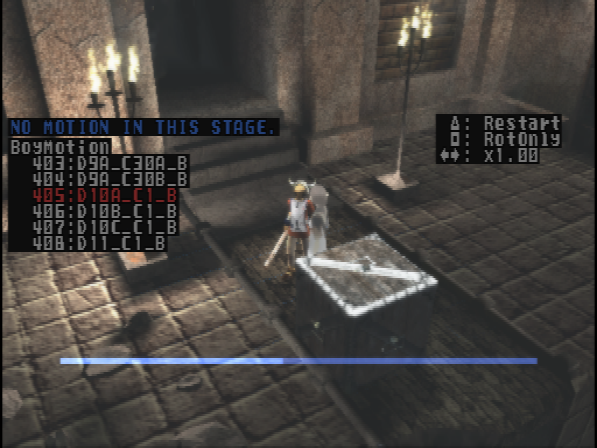
However, e-koʊ lifting a bomb up to a torch to light it was not always done by wildly jumping into it, as is done in speedruns today. The act used to have its own animation called "BOY CATCH_FIRE_BOMB". This animation was present in the June 8th demo build, but removed from the MotionViewer's animation list by the time of June 26th's demo build.

"INJURIES — Some spirits have the power to throw you with such force that you can fall to your doom before you can defend yourself"
This is a possible fail state, and probably has been since the Shadows were capable of knocking e-koʊ backwards. Even at the time of this outdated info, it seems to me that knockback effect was a big factor of combat. And if a Shadow happens to hit e-koʊ off the edge of Trolley's building, for instance, you will certainly 'fall to your doom before you can defend yourself'.
But why didn't this end up in the North American manual? I see two potential possibilities for that:
#2 is certainly the most interesting possibility, but unlike with The Sentinels, I have no evidence to say one way or the other.
I also notice that neither manual makes mention of e-koʊ being turned to stone as the diagetic Game Over catalyst for failing to save yoruda. This is likely because it was not a feature at the time of the source document's creation.
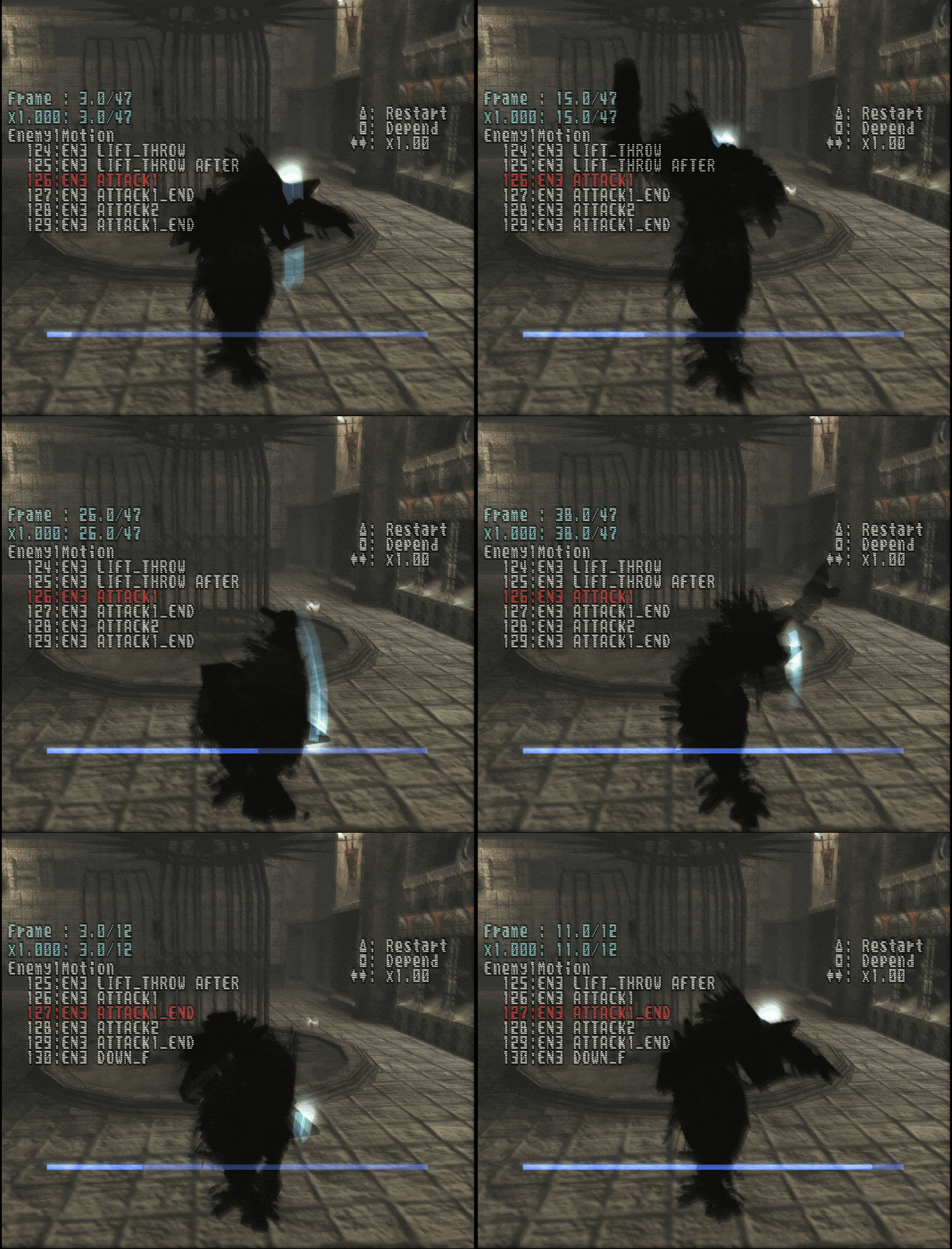
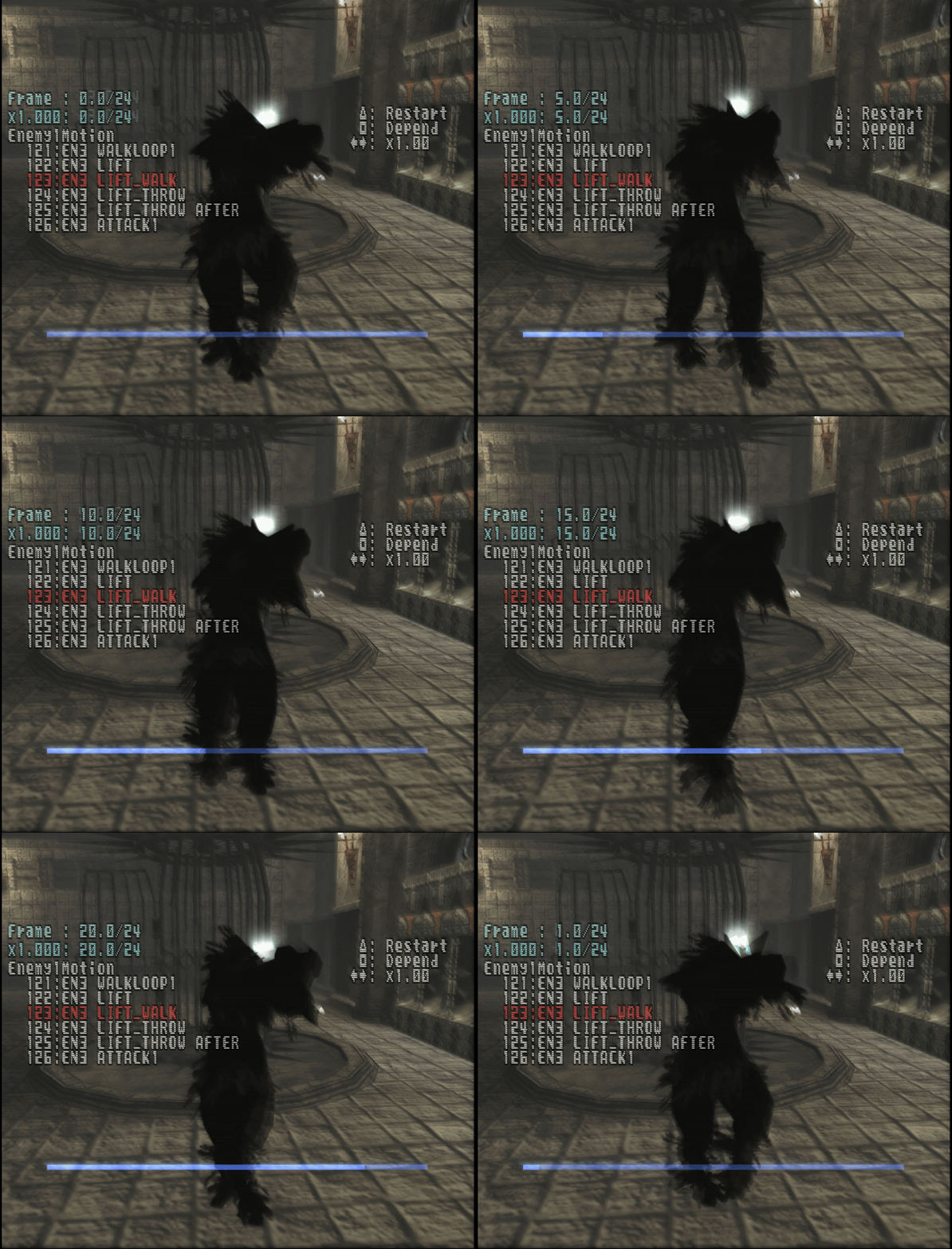
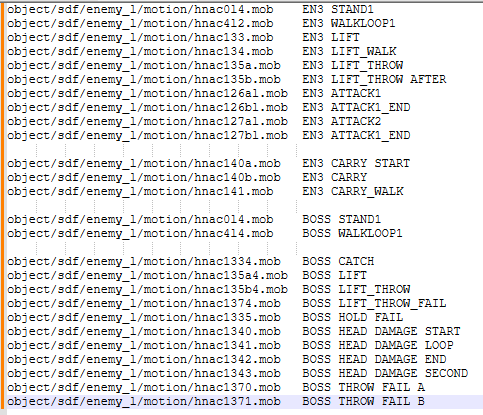
At the very least, it was not be properly implemented as an effect in the June builds. So the effect seems to have been finalized sometime in July, around the same time they removed The Sentinels (see under the "'EN3' and 'Boss' Enemy Animation Data" button).
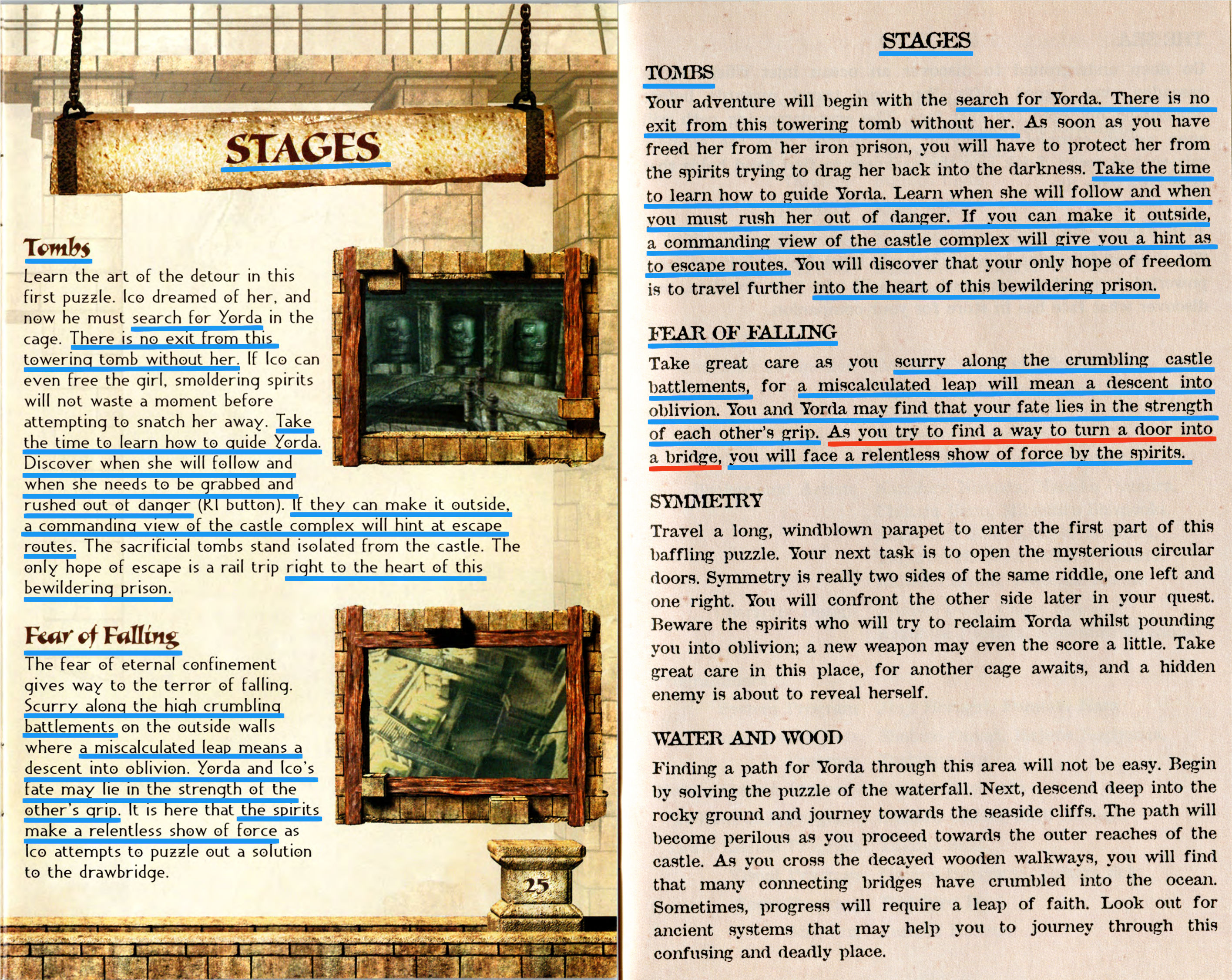
Being wary of grammatical errors that could indicate more editorial fatigue, I couldn't help but notice this strange sentence in the North American manual:
"e-koʊ dreamed of her, and now he must search for yoruda in the cage"
"search for yoruda in the cage"? That tiny cage?

yorudas name seems to be strangely inserted into this phrase. At first, I thought it likely that the original source read 'the girl in the cage'. But... that is a phrase the NA manual actually uses in an earlier segment:
"He has to first search out the girl in the cage"
That makes the change on this page all the more unusual. Why avoid the phrase by inserting yorudas name? Especially when it was used once before?
Perhaps my initial assumption was off-base, and the original noun was not 'the girl' after all? If it were originally more contentious, that could explain the EU manual's quiet removal of the surrounding context...
Thinking on it, e-koʊ did not dream of 'a girl'. His dream depicted yoruda as a pitch black shadow, a form she also takes on at the end of the game. The form is internally titled 'devil_girl' and referred to as an 'akuma' (悪魔) in the Japanese manual when e-koʊs dream is described.
Perhaps, then, the Japanese source also used the term 'akuma', since this sentence references e-koʊs dream and what he saw in it?
Such a description does line up better with the original storyboard, where her silhouetted form had e-koʊs own horns on her head.
But, not being able to easily correlate that culturally loaded term with the simple silouhette of yoruda used in the final, it's possible that both of Sony's regional branches decided to alter the source's phrasing?
If that's true, their perfectly aligned change (both chosing to replace the confusing term with yorudas name) makes it difficult to be certain. And before we jump to a conclusion, I can offer another possibility.
If we assume yorudas name is part of the source document's phrasing here, perhaps 'cage' is what's causing confusion?
This entire stage was nicknamed 'cage' within the stage select. Additonally, its 'stagesetting' file is listed as 'jail'. So it is possible that by "search [...] in the cage" they mean the whole stage.
The Japanese term they used was likely 檻 which can be translated as both 'cage' and 'jail'. But even so, it is not usually referring to a whole complex or building, just one jail cell and/or one pen. And I think, without a proper explanation, that phrase would mislead anybody into thinking e-koʊ was searching one big cage, wouldn't it?
With a statement like this, I think Team e-koʊ would be obligated to go into more detail about the locale in their source document. And I don't think the North American manual, in particular, has ever shied away from a longer description of a location, if the source document provided one. So I'm left doubtful of this possiblity as well.
It seems that 'Tombs' is a grouping of maps that extends from Altar (Stage 13b) all the way to Trolley 1 (Stage 8a).
"The sacrificial tombs stand isolated from the castle. The only hope of escape is a rail trip right to the heart of this bewildering prison"
There are tombs (or rather, grave markers) in later areas of the game, but those areas are all described later. Furthermore, these are described with the term 'sacificial' and 'stand isolated from the rest of the castle', which matches perfectly with the description of the イ building's sacrificial capsules.
But, the really interesting thing is the description that follows 'Tombs': 'Fear of Falling'.
"Scurry along the high crumbling battlements on the outside walls where a miscalculated leap means a descent into oblivion. yoruda and e-koʊs fate may lie in the strength of the other’s grip"
Crumbling castle battlements also describes a section of the Trolley stage. And that line about the pair's fate lying 'in the strength of each other's grip' feels like an obvious tell for the area you find just moments after riding the rails: The first place where you are tasked with helping yoruda across a gap.
This split in the Trolley stage found between 'Tombs' and 'Fear of Falling' signifies the area's earlier map design. From the remnants of data we have, it seems everything leading up to the trolley ride was once Stage 8a and everything after (including the Crane segment) was Stage 8b.
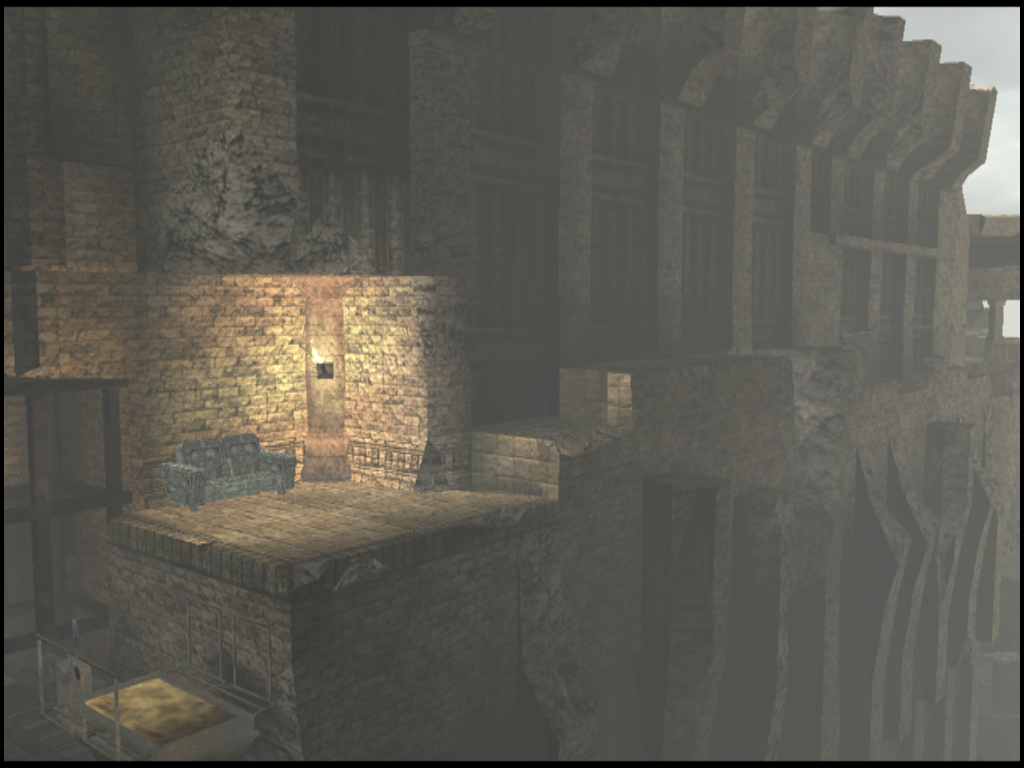
Stage 8b is most prominently acknowledged in a segment of data from the June 29th build. The MAIN.ELF for which was miraculously fished out of a European Demo Disc (Selector Demo 01).
[Note: These listings are not of actual existing .p2o or .cl files. These are merely references to files that we do not have access to.]
But the existence of 8b is also signaled in coded events that are still used in the final release. Particularly for the crane (which was roughly transcribed as 'kuren', based on the katakana spelling: クレーン)
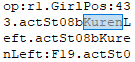
[Pictured: Data from June 29th's MAIN.ELF file, viewed through a hex editor]
It's original status as a segmented version of the map we know now also makes logistical sense.
This is not the first time two smaller maps got merged together during development, thanks to the transition from PS1 to PS2. Stages 2a and 3t (Waterfall and Sunbeams) are both notable maps that were initially split into parts (2a & 2b) (3a, 3b, & 3c) during the PS1 era of development. But they were each allowed to load together, as one stage, on PS2.
And the sheer size of the current Trolley stage makes it clear that a PS1 build couldn't handle all of it.
"yoruda and e-koʊs fate may lie in the strength of the other’s grip"
Also worth mentioning, this description fits very well when considering cut content. In the June 8th demo, it was possible to let yoruda go after catching her from across a gap. You had to hold down R1 the whole time, as releasing the button before she grasped anything past your hand would send her plummeting to her doom.
This was removed by the time of the August builds for obvious reasons.
"As you try to find a way to turn a door into a bridge, you will face a relentless show of force by the spirits"
I have no idea what the EU manual's addition is referencing.
"It is here that the spirits make a relentless show of force as e-koʊ attempts to puzzle out a solution to the drawbridge"
That both manuals use the term 'show of force' to describe this segment calls the Japanese term 示威 to my attention. 'show of force' is commonly listed as one of the only ways to translate this.
I would also like to point out something off about this statement: 'puzzle out a solution to the drawbridge'. If you ask me, there is no real puzzle to the drawbridges themselves in the final game.
There are puzzles to begin the long and winding journeys to the East and West Arenas, but the bridges are just a means to backtrack from those areas after they're completed. Even if pulling the switch to lower them counts as a puzzle, I don't think its one worth mentioning in the game's manual.
But, in the PS1 version at least, there seemed to be some form of puzzle. One clip suggests the bridges are only lowered for a limited time, as one side begins rising, during gameplay, just before e-koʊ can reach it.

So this passage may be referencing a cut feature of the stage that possibly remained (as a leftover of the PS1 build) in the early development of the PS2 version.

"Symmetry
Travel a long windblown parapet atop a sky-high castle bridge to enter the first area of this baffling puzzle"
Before properly addressing 'Symmetry', we must address that we have skipped a major part of the journey. 'Fear of Falling' firmly ends at the Drawbridge stage, where the spirits come in droves to stop e-koʊ and yoruda (a fight with 16 enemies total, if you sit through all of it).
But suddenly we cut to the East Crag stage, literally called 'Symmetry_L' in the game's files. In doing so, the English manuals both skip over even the vaguest descriptions of Main Gate, Graveyard, Dark Room, Windmill, Sunbeams, and Stone Pillar.
Obviously, not every stage needs a sentence dedicated to it, but this is a large swath of maps, back-to-back.

[Original map image compiled by Nomad Colossus]
To emphasize my point, I colored all the segments of the castle referenced by the passages, favoring info from the North American manual, which seems to include more detail. The lack of coverage on the lower-right corner of the fortress should be apparent.
The question with any subject that both manuals exclude quickly becomes: Was this due to outdated information, or was this never covered by the original source document?
The only reasoning I could suggest for the latter is: "Maybe Team e-koʊ wasn't sure about the arrangement of these rooms at the time of writing?" But even that doesn't feel like a convincing enough reason to skip over all of it.
So I'm inclined to think 'outdated information' was the primary reason for this change. But the severity of that change is still pretty shocking.
Both branches, uniformly, decided to just exclude this portion of the castle's description. Not just one sentence, all of it. I imagine either that there were several instances of outdated info, or there was one big glaring contradiction which related to most of the segment's description. But we can only speculate as to what.
"The spirits level a furious effort to reclaim Yorda while pounding Ico to the ground. A better weapon would even the score as the spirits become bigger and meaner"
I find it very interesting that the EU manual excluded certain terms here... Search back to where I referenced cut animations for an 'EN3' Shadow, and then contemplate the word use of 'bigger and meaner'.
Although, setting aside the EN3 Shadows, it's also possible this line is referencing the cut Mid-Boss that was planned to appear, at one point, in 'Duel Arena R' (West Arena).
In any case, this feels like another removal for sake of covering up outdated information. Which makes this next inclusion a little strange.
"Take great care in this place, for another cage awaits, and a hidden enemy is about to reveal herself"
Despite doing everything to obscure The Queen's existence, the EU manual drops a very intentional hint here, where the NA manual is more explicit.
But this feels like a decision made in ignorance, especially with the wording they chose.
"Take great care in this place, for another cage awaits, and a hidden enemy is about to reveal herself"
This place, with a cage, where an enemy (The Queen), who up until this point has been hidden, will reveal herself to us.
You can't even utilize the potential reinterpretation that the NA manual's passage lends itself. Saying "the Queen prepares to take a personal role in stopping the escape" drapes a vague curtain over the timing of her appearance, so it could just as easily be referencing Ico and Yorda's second attempt to leave.
But the EU manual, likely being more faithful to the source text, locked it into a specific time and place that reveals cut content. In this case, the removed Scene 7 at East Idol Stairs and the alternative version of Scene 6 at Main Gate.

[]
Let's reorient ourselves a bit.
How do we know there is a source document shared between these regional branches?
How do we know the document was originally in Japanese?
How do we know Team ICO specifically wrote this source document?
The Narrative Setup corresponds to information provided by both members of press in direct contact with Sony's representatives, and key members of development staff in pre-release interviews.
The text brings up unique concepts and ideas, unexplored by the game. For instance, []. No self-respecting editor would encourage these baseless additions, much less be permitted by the parent company to add them.
When was it written?
How is this of use to fans?
[]